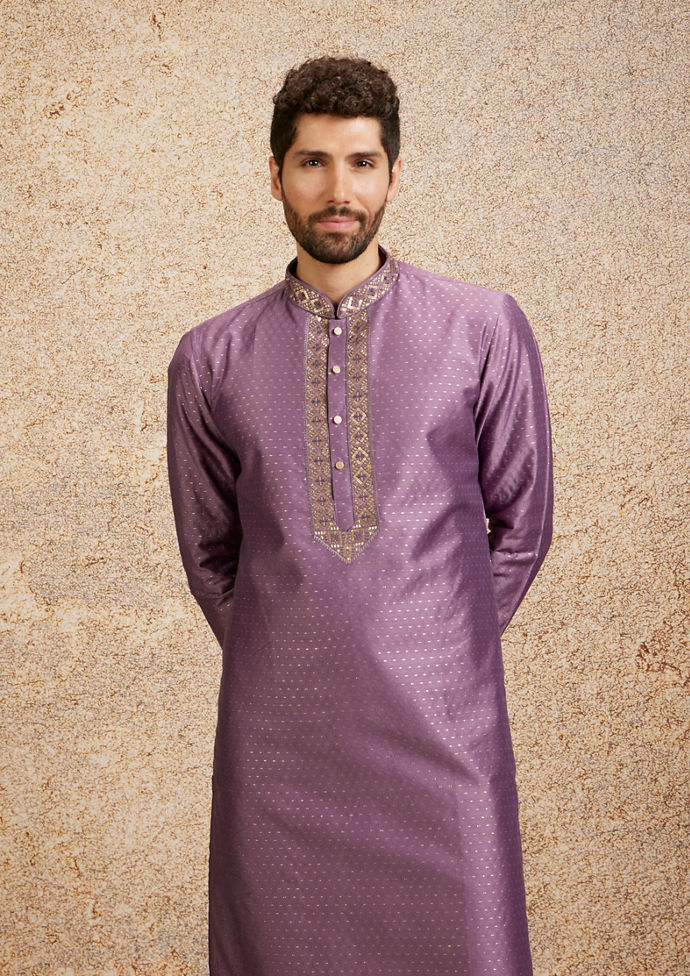
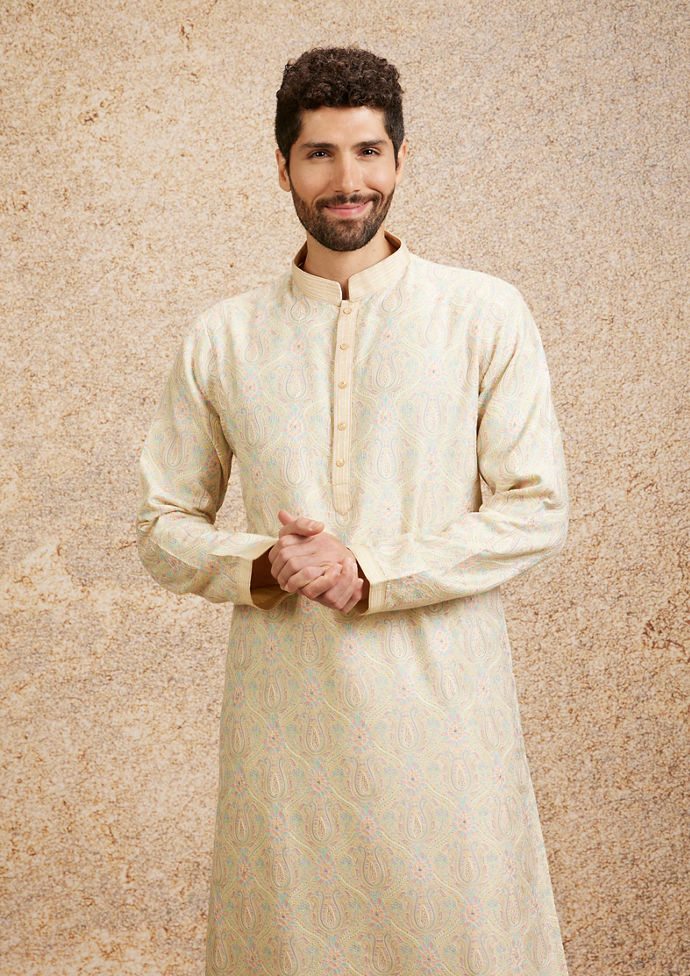
Embroidery kurta for men
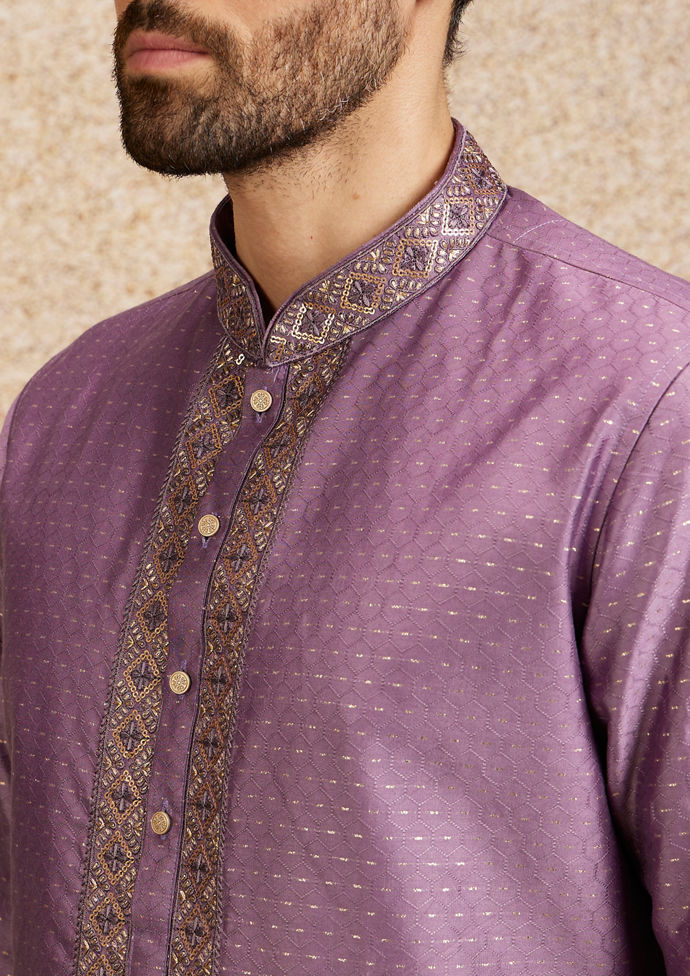
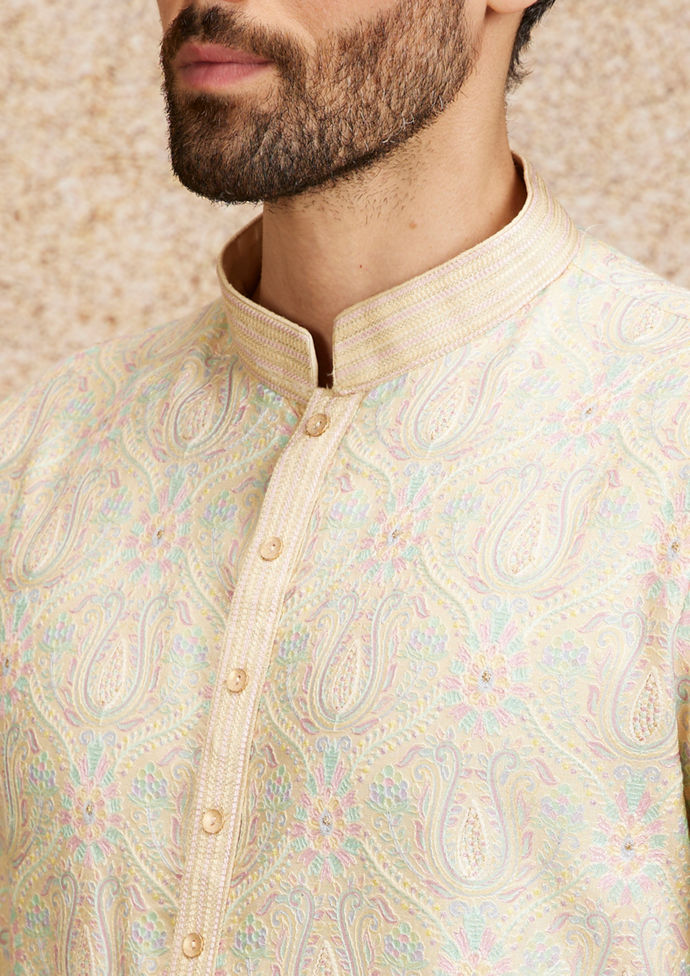
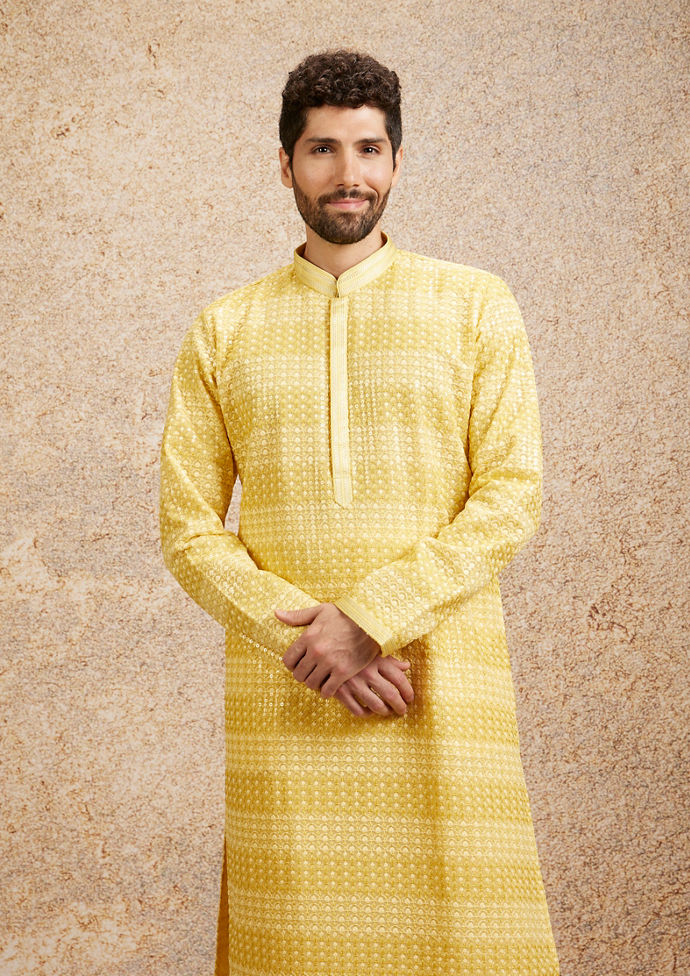
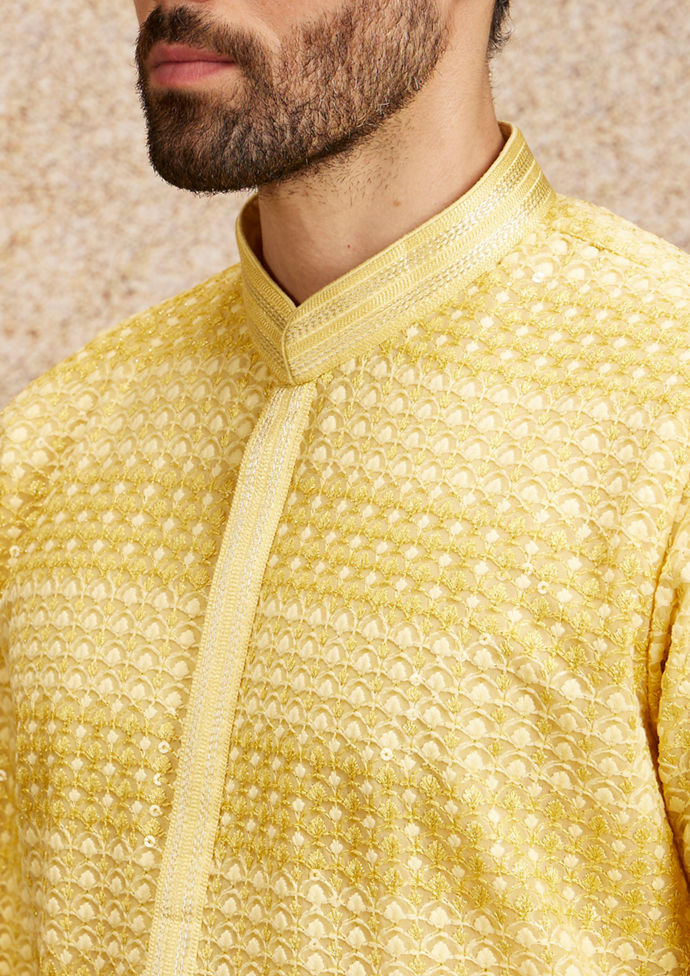
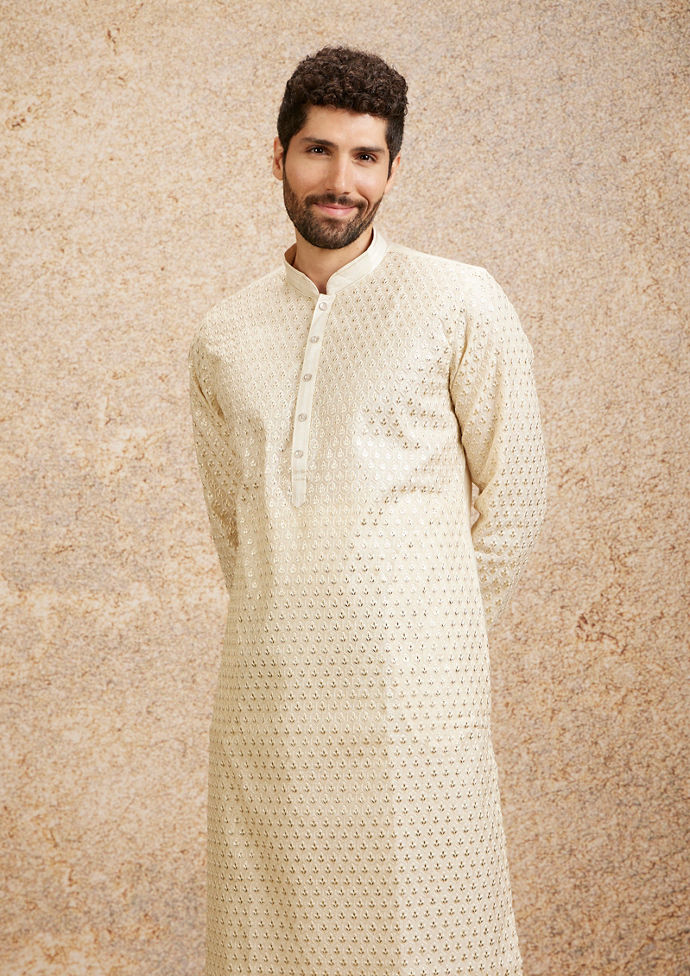
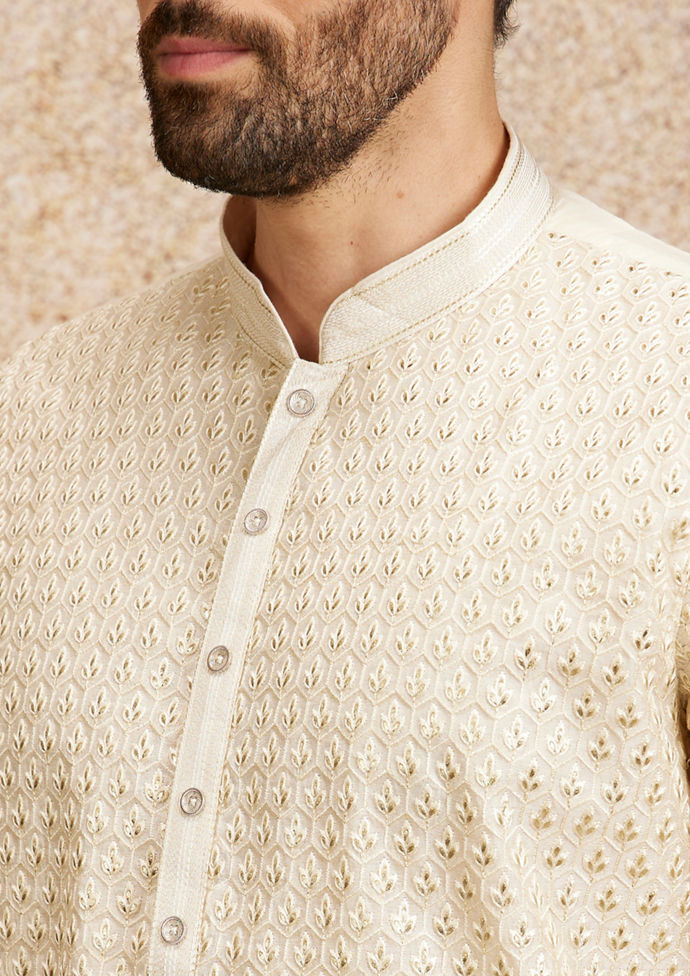
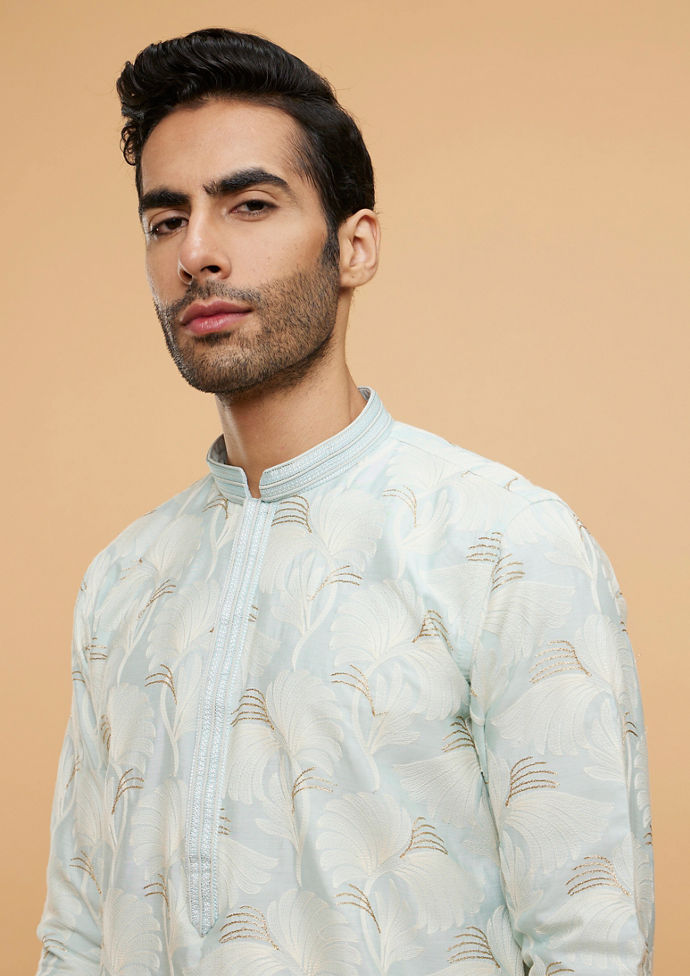
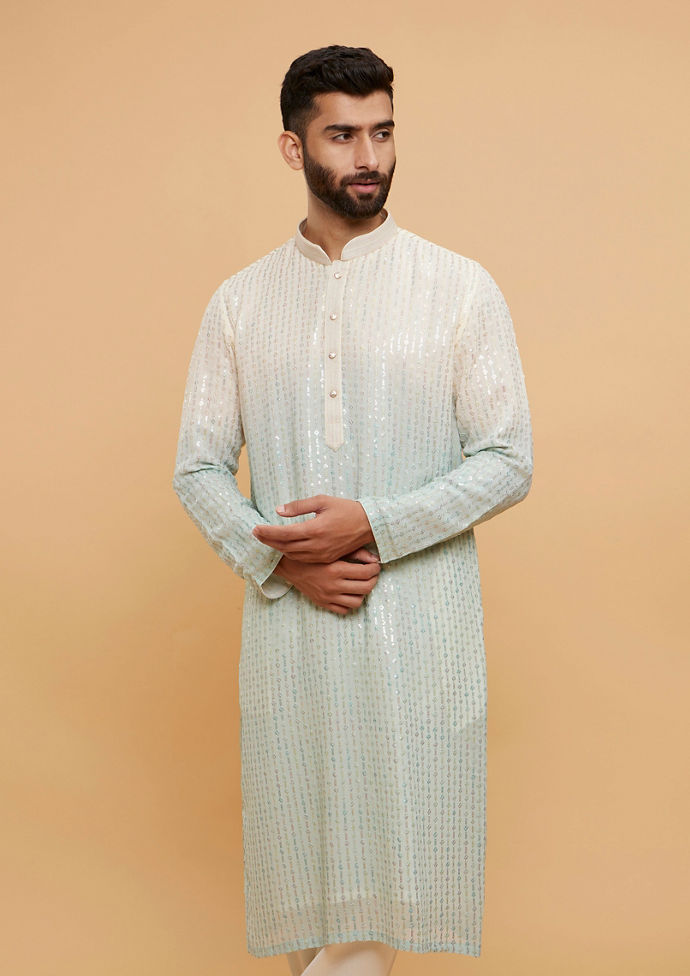
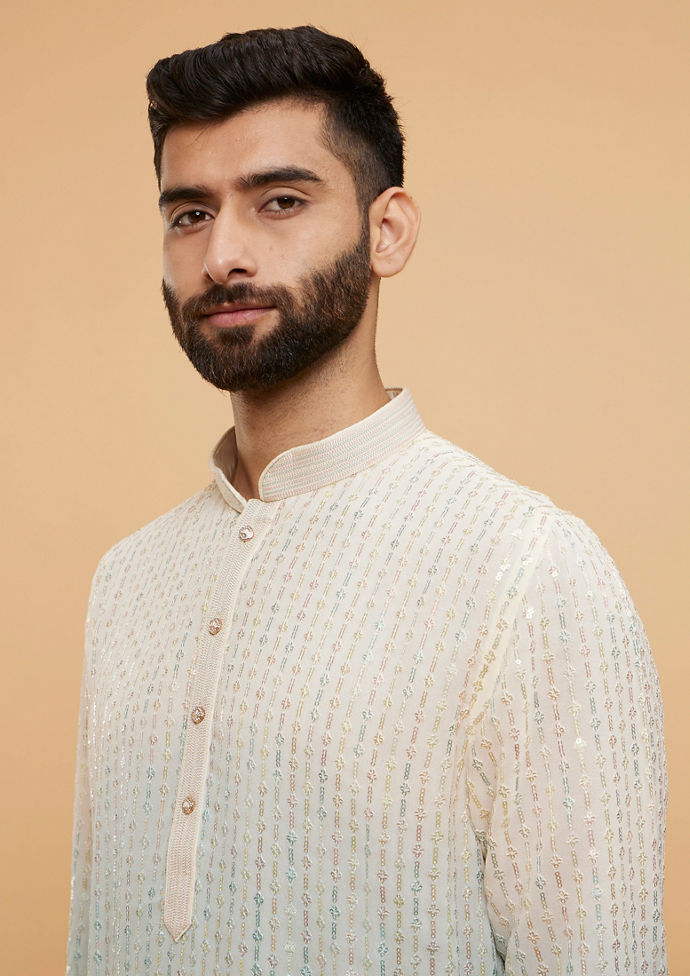
An embroidery kurta transforms traditional ethnic wear into a polished choice for weddings, festivals, and formal occasions. Thread, sequin, and stone work add depth to the classic silhouette, creating designs suited to grooms, close family members, and guests. Our collection includes thread work, resham embroidery, mirror work, and zardozi techniques across silk, georgette, velvet, and chanderi fabrics, each selected for durability and visual presence.
Whether you are attending an intimate sangeet or a large wedding reception, the right embroidery kurta depends on the occasion, your fit, and fabric quality. We have organized styles by color, neckline, and embroidery density so you can match the formality of the event and your body type. Each kurta requires dry-clean care, which preserves the embroidery work across multiple wears.
Shop Now: Cotton Kurta For Men
What defines a men's embroidery kurta and why it's ideal for occasion wear?
Hand-embroidered versus machine-embroidered kurtas quality and durability differences
Hand embroidery involves artisans stitching designs directly into fabric, which takes time but creates depth and texture that machine work cannot replicate. Hand-embroidered kurtas tend to hold their shape better over years of wear because the stitches are anchored individually. Machine embroidery is faster and more uniform, making it cost-effective for detailed patterns. Machine-stitched pieces are durable for regular occasion wear, though the thread can loosen if the garment is washed frequently or handled roughly.
Fabric choices for embroidered kurtas silk, georgette, cotton, and linen
Silk drapes elegantly and takes embroidery beautifully, making it a top choice for weddings and formal events. Georgette is lighter than silk and breathes well, so it works for daytime occasions or warmer climates. Cotton is practical and washable, ideal if you plan to wear the kurta multiple times. Linen offers a relaxed texture and is comfortable for summer events, though it wrinkles more easily than other options.
Embroidery styles suited to weddings, festivals, and formal events
Wedding kurtas often feature dense, intricate embroidery concentrated on the chest and shoulders, sometimes with gold or silver thread. Festival wear typically uses brighter colors and bolder motifs, think geometric patterns or floral designs, that stand out in group settings. Formal events call for restrained embroidery, perhaps a subtle border or small focal point on the front, so the kurta reads as polished rather than ornate.
Fit and layering considerations for embroidered occasion wear
Embroidered kurtas sit slightly looser than everyday wear to accommodate the added weight and texture of stitching. A well-fitted kurta should reach mid-thigh and allow room for a shawl or stole layered over it. If you plan to wear it with a jacket or waistcoat, choose a kurta that fits close enough at the shoulders so the layers don't bunch. Sleeves should end at your wrist bone to look proportionate when layered.
Which embroidered kurtas are available in this collection?
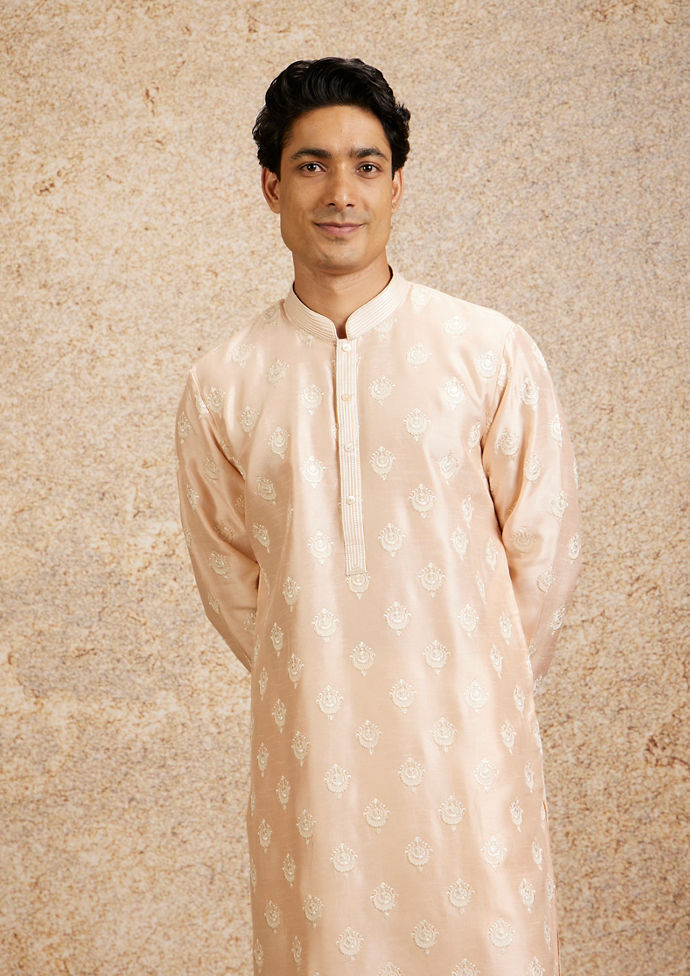
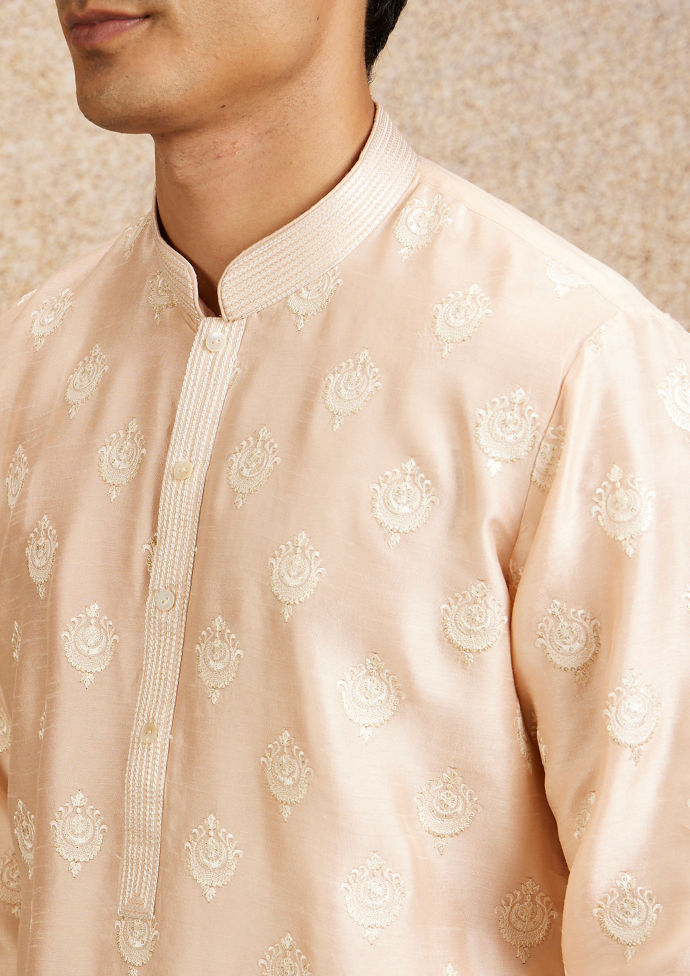
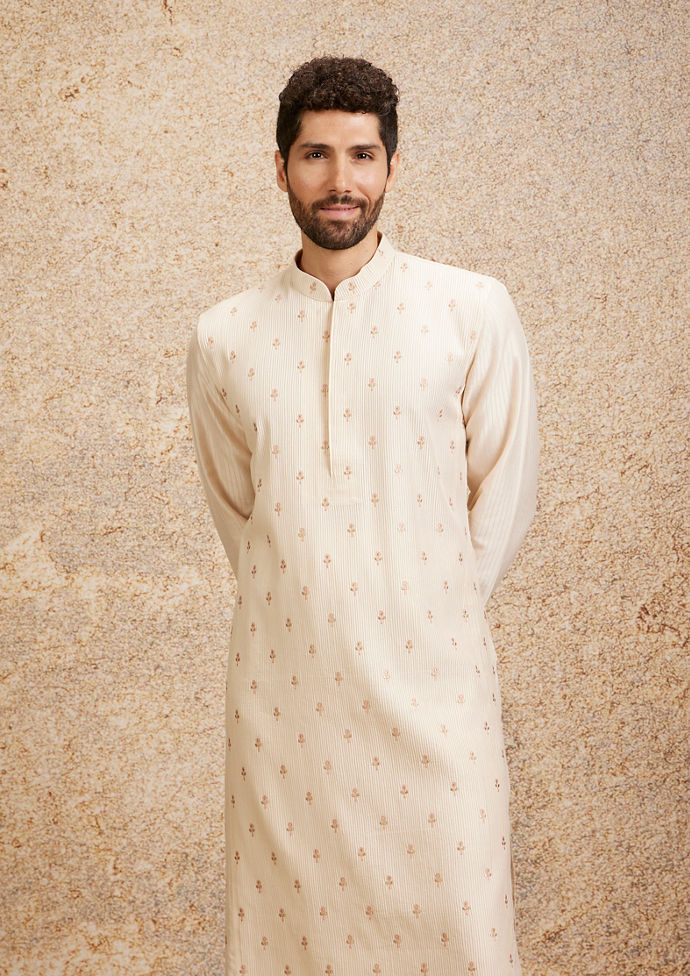
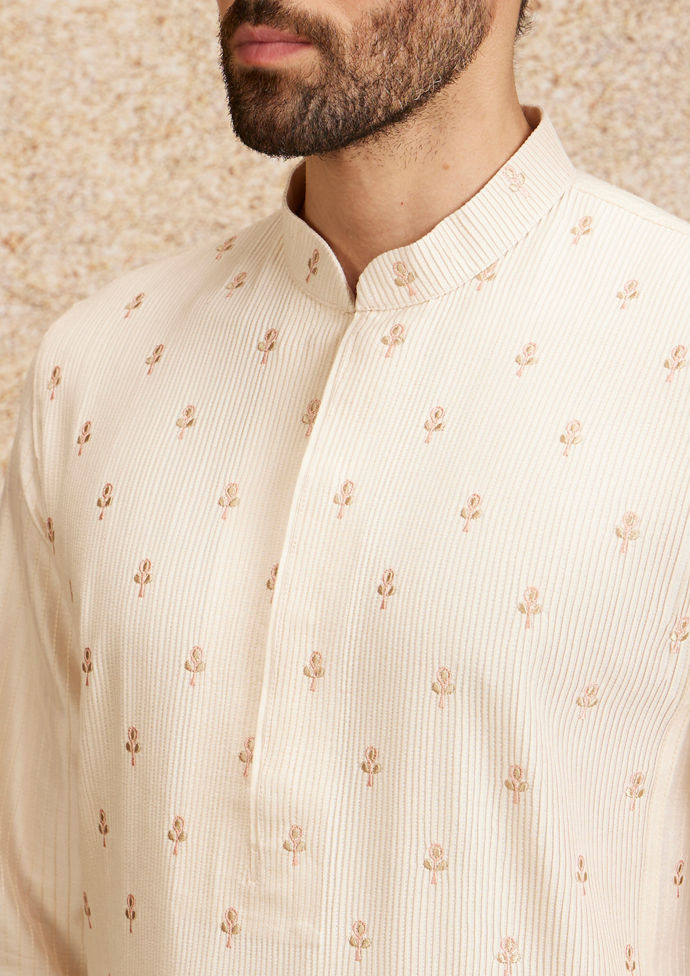
Beige silk resham embroidered kurta set
This kurta pairs pure silk with resham (silk thread) embroidery for a refined finish at formal occasions. The neutral beige works across skin tones and coordinates with traditional accessories or modern styling. Resham work adds texture without overwhelming the silhouette, making it ideal for receptions when you want polished elegance.
Olive green georgette embroidered kurta
Lightweight georgette keeps this olive green kurta breathable for extended wear at festivals and family gatherings. The earthy green shade works for both spring celebrations and year-round formal events. Embroidered detailing on the chest and shoulders adds visual interest while keeping the overall look approachable rather than heavily ornate.
Premium silk and cotton blend options with traditional motifs
Our premium selections blend silk with cotton to balance durability and comfort, featuring traditional embroidery motifs rooted in heritage craftsmanship. These blends resist wrinkles better than pure silk while maintaining the luxury drape and sheen of occasion wear. Traditional patterns such as floral, geometric, and paisley designs are executed with precision, so the embroidery remains the focal point.
Occasion-specific collections wedding, haldi, and celebration wear
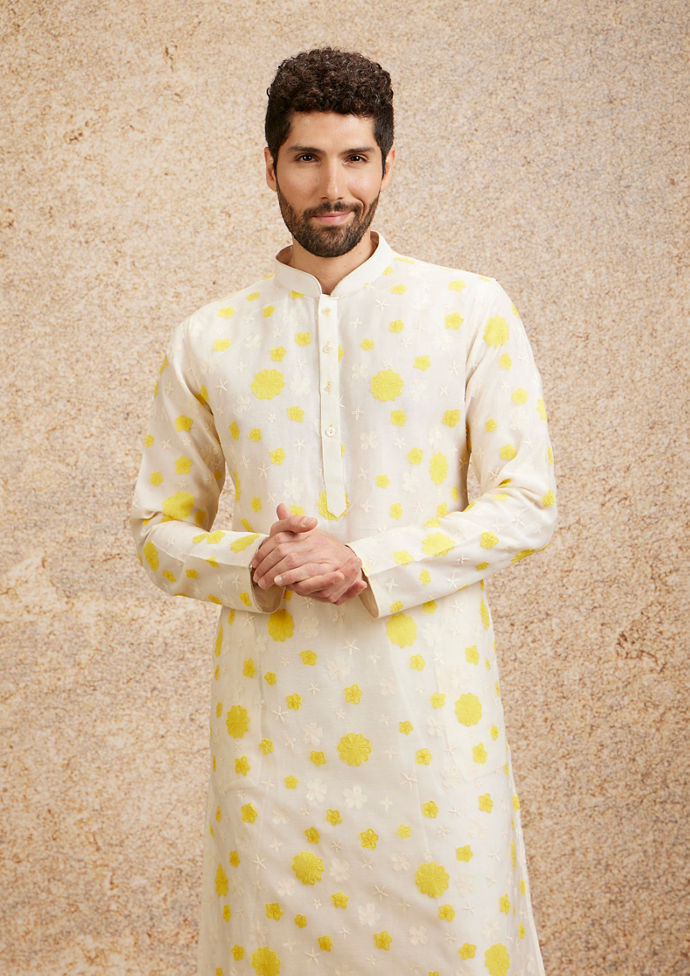
Wedding kurtas feature dense embroidery concentrated on the chest, shoulders, and neckline, often in gold or silver thread for maximum impact. Haldi wear embraces brighter colors like mustard and pink with bold embroidery that photographs well in group settings. Celebration wear spans formal receptions and sangeet events, offering designs that balance statement-making details with comfort for extended periods.
How to choose the right embroidered kurta for your body type and occasion?
Determine your fit sizing for chest, shoulder, and sleeve length in embroidered styles
Embroidered kurtas sit differently than plain styles because the embroidery adds structure and weight to the fabric. Start by measuring your chest at the fullest point and compare it to the kurta's chest width when laid flat. Shoulder seams should sit right at your shoulder bone, not drooping or pulling. For sleeve length, measure from the center back neck down your arm to your wrist; most kurtas run long, so check the exact length before ordering. Embroidery can make a kurta feel tighter, so if you're between sizes, consider going up.
Match embroidery density and neckline to your occasion and formality level
Heavy embroidery on the front, sleeves, and hem works for formal events and celebrations. Light embroidery, a scattered pattern or trim only, suits casual wear and everyday occasions. The neckline matters too: a round neck with minimal embroidery reads casual; a deep V-neck or asymmetrical cut with dense embroidery signals formal wear. If you're attending a family gathering or wedding, check what others typically wear so your kurta fits the formality level.
Select fabric weight based on season and layering needs
Lightweight cotton or cotton-silk blends work best in warm months and if you wear the kurta alone. Heavier cotton or linen holds embroidery better and works for cooler seasons or layering over a slip or undershirt. Embroidered kurtas in dense patterns can feel warm because the stitching traps heat, so factor that in if you live in a hot climate or plan to wear it indoors.
Assess embroidery placement and pattern scale for your frame
Large-scale embroidery patterns can overwhelm a petite frame, while smaller, detailed work suits most body types. If embroidery is concentrated on the chest and shoulders, it draws the eye upward, useful if you want to balance wider hips. Embroidery running the full length of the front can elongate your silhouette. Placement on the sleeves and hem adds visual interest without adding bulk at the center.
Shop embroidered kurtas by key features and preferences
Filter by embroidery type chikankari, resham, zari, and mirror work
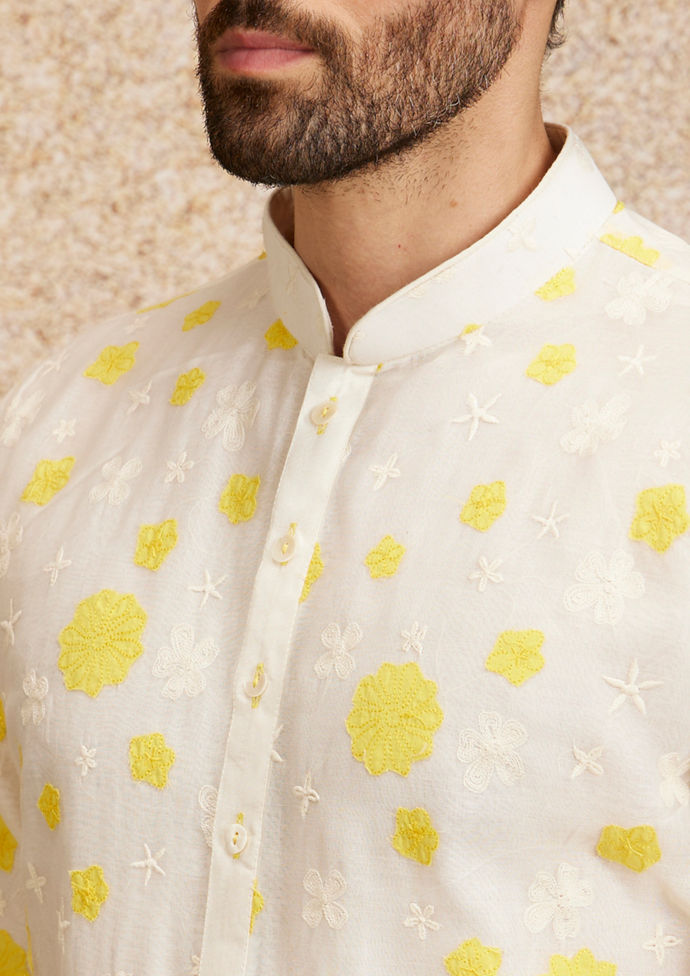
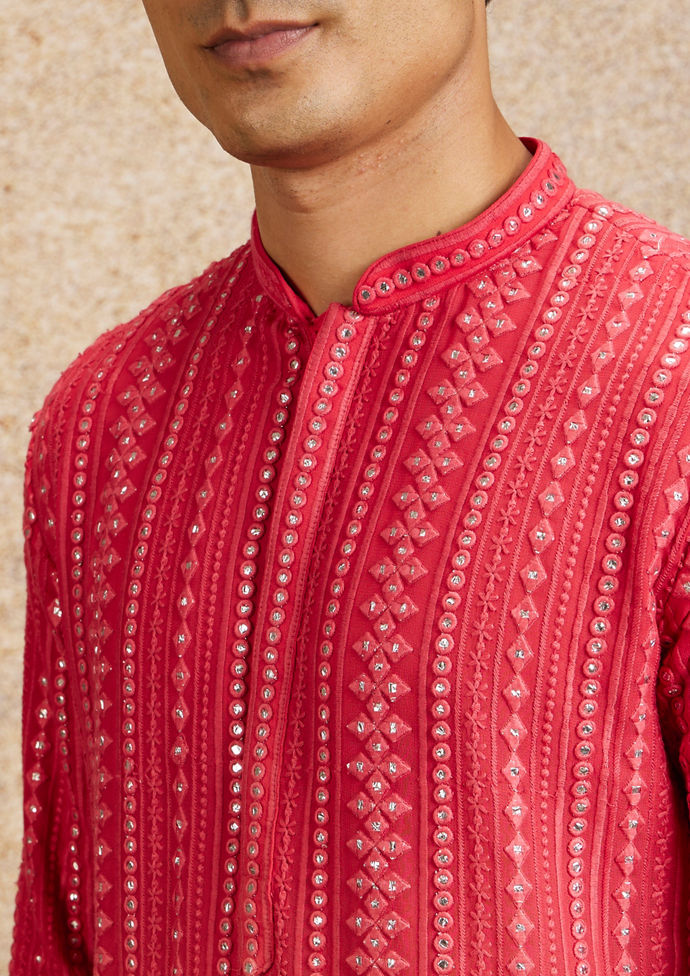
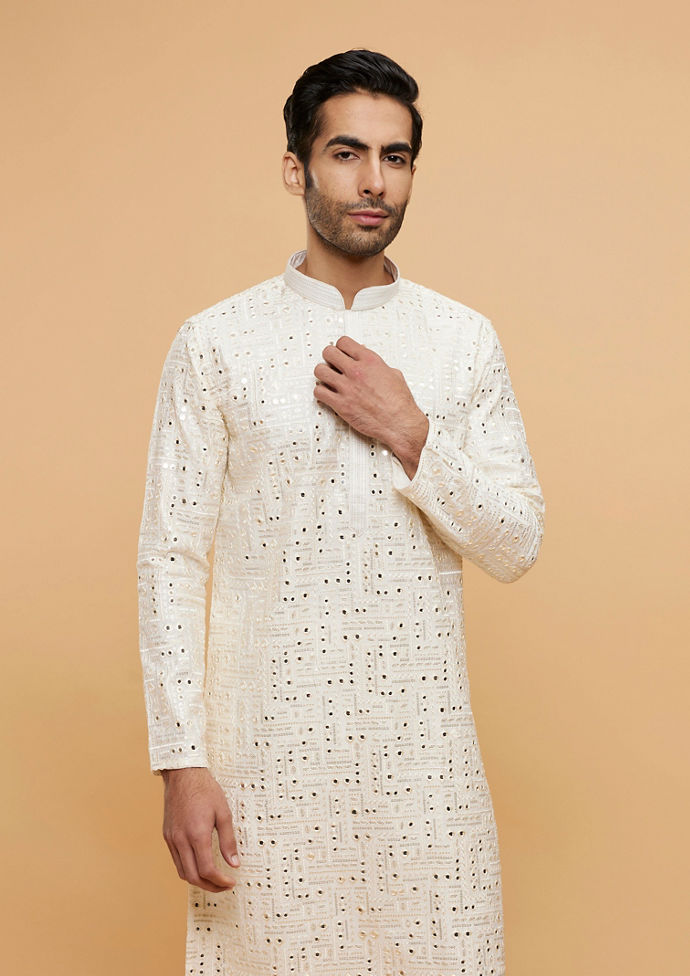
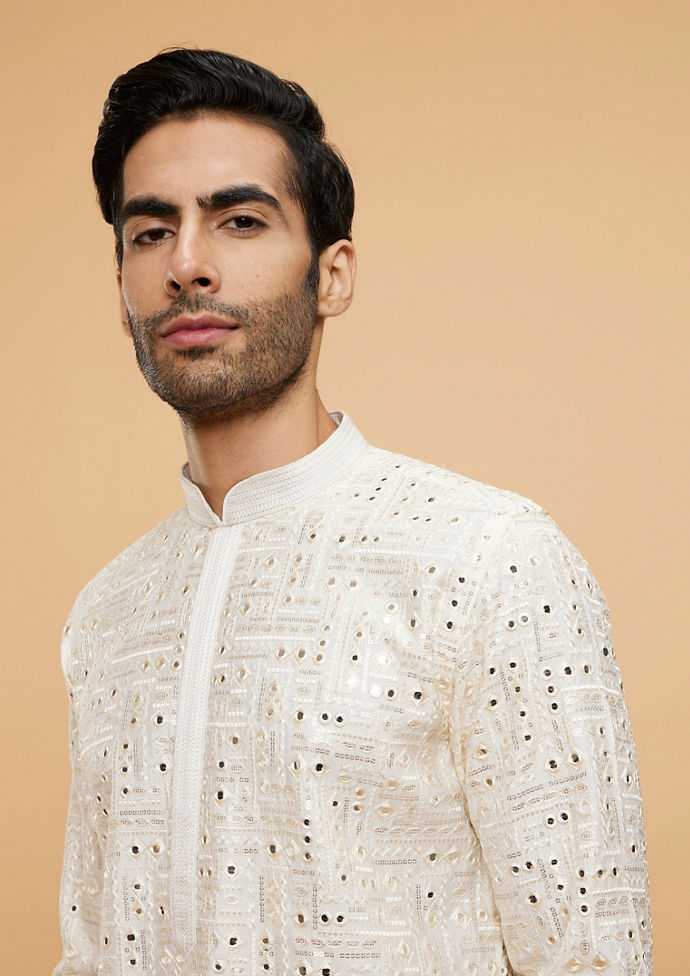
Each embroidery technique creates a different look and suits different occasions. Chikankari uses fine needle work for delicate, understated detail, good for daytime celebrations. Resham (silk thread) embroidery adds texture and richness without heavy metallic shine, making it ideal for weddings and formal events. Zari incorporates gold or silver metallic thread for maximum impact at grand ceremonies. Mirror work reflects light and works well at festive gatherings where you want visible sparkle.
Browse by neckline mandarin collar, v-neck, and round neck designs
Your neckline choice affects how embroidery frames your face and shoulders. Mandarin collars keep embroidery concentrated on the chest and shoulders for a formal, structured look. V-necks elongate your silhouette and work well when embroidery is placed symmetrically down the front. Round necks balance embroidery placement across the chest and let sleeve embroidery stand out.
Explore by color palette jewel tones, pastels, and traditional neutrals
Color determines what occasions work best and how embroidery shows against the base fabric. Jewel tones like emerald, sapphire, and wine suit weddings and evening events. Pastels work for daytime celebrations and lighter seasons. Traditional neutrals like ivory, beige, and charcoal pair embroidery with understated elegance, making them versatile across most occasions.
Narrow by price range and occasion category
Our collection spans multiple price tiers based on fabric quality and embroidery density. Wedding and groom wear typically features heavier, more elaborate embroidery. Festival and celebration wear offers balanced embroidery for extended comfort. Formal event wear emphasizes refined placement and premium fabrics. Match your occasion and budget to find embroidered kurtas that deliver the right balance of craftsmanship and wearability.
Care and styling tips for embroidered kurtas
Hand-washing and drying best practices for delicate embroidery
Embroidered kurtas need gentle handling to keep the thread and metallic work intact. Hand-wash in cool water with mild detergent, rubbing the fabric gently instead of twisting. Don't soak for longer than 15 minutes. Rinse thoroughly until the water runs clear, then press out excess water without wringing. Lay flat on a clean towel to air-dry away from direct sunlight, which can fade colors and weaken threads.
Layering with dupattas, jackets, and traditional accessories
Pair embroidered kurtas with dupattas draped over one shoulder or both for formal occasions. A structured jacket or blazer works well for modern styling without overwhelming the embroidery. Layer with a plain churidar or pajama so the kurta embroidery stays the focal point. Choose complementary accessories like cufflinks or traditional brooches that enhance the embroidery rather than compete with it.
Storage methods to preserve embroidery detail and fabric integrity
Store kurtas with embroidery on padded hangers or folded inside acid-free tissue paper to prevent creasing and thread damage. Keep them in a cool, dry cupboard away from moisture and direct heat. Avoid plastic bags, which trap humidity and can cause mildew on delicate fabrics. Check stored pieces monthly for dust or pests, and make sure the storage area has good air circulation.
Frequently asked questions about men's embroidery kurtas
How do I know if an embroidered kurta will fit my shoulders and chest correctly?
Check where the shoulder seam sits against your natural shoulder line and measure your chest to ensure you can layer a shirt underneath comfortably. Most embroidered kurtas run true to size, so compare your measurements to the product specifications before you order.
Will the embroidery last through multiple wears and washes?
Quality embroidery stays durable when you hand-wash in cool water with mild detergent and air-dry flat away from direct sunlight. Avoid twisting or wringing the fabric, which weakens threads and metallic work.
What's the difference between chikankari and resham embroidery for men's kurtas?
Chikankari uses fine needlework with delicate thread patterns and cutwork, creating a lightweight, intricate look for festive occasions. Resham embroidery uses thicker silk or cotton threads for bolder, more textured designs suited to formal weddings and celebrations.
Can I return or exchange an embroidered kurta if the fit isn't right?
Return and exchange policies vary by retailer. Contact customer care with your order details and fit concern to explore options for luxury items.
How should I care for silk embroidered kurtas versus cotton ones?
Silk kurtas need gentler handling and dry-cleaning for best results, while cotton embroidered kurtas can be carefully hand-washed. Store both on padded hangers in cool, dry cupboards away from moisture and heat.
Explore More Collections: Indo Western Dresses For Men , Jodhpuri Suit For Men , Pink Printed Kurta



_19-09-2024-16-14:345x488?&dpr=on,2)
_19-09-2024-16-14:345x488?&dpr=on,2)