Men's silk kurta collection
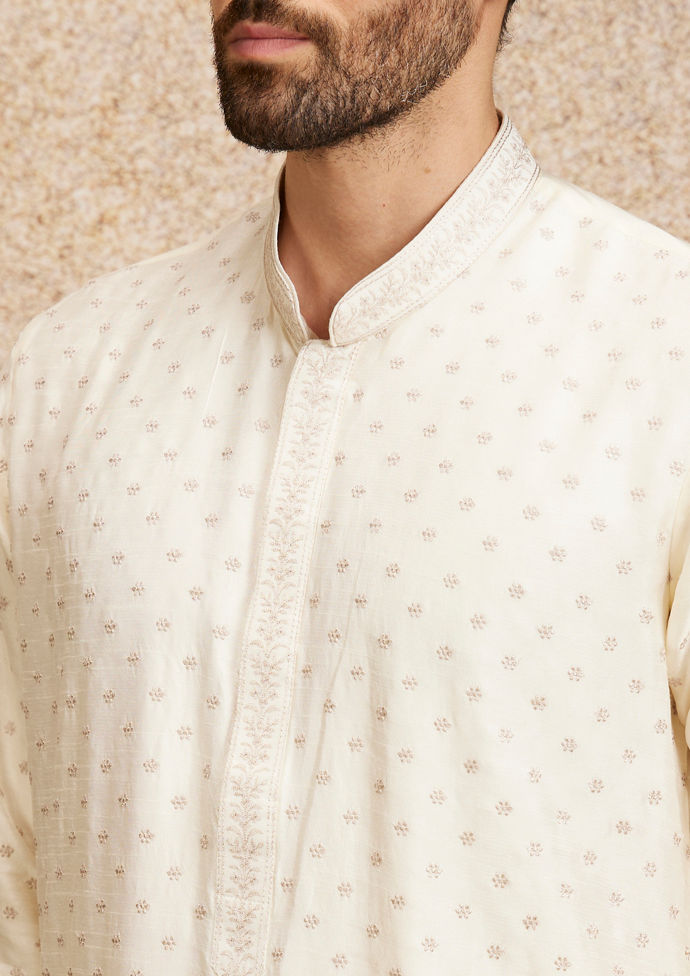
A men's silk kurta works for a wedding when the hem falls 2 to 4 inches below the knee, the shoulder seam sits on your shoulder point, and the embroidery lies flat across the yoke and placket.
Silk and silk blends hold their shape through long ceremonies. A black kurta suits a reception, ivory and mustard suit daytime rituals, and lighter fabrics such as georgette, viscose, and chanderi keep you comfortable at warm venues.
Twamev's collection focuses on embroidered kurta sets and kurta jacket sets for sangeet and reception wear, dry clean only.
What makes a men's silk kurta right for wedding and festive wear?
Silk kurta for men fabric weights and drapes that suit Indian ceremonies
At 60 to 90 gsm, a light silk kurta falls close to the body, which suits puja and long stretches of sitting on the floor. Move up to 100 to 150 gsm and the cloth holds its own shape, so the front stays clean through a full evening ceremony. Weight is the first thing to check, because the same weave behaves differently at either end of that range.
Fit markers shoulder seam, chest ease, and kurta length in inches
Start at the shoulder seam: it should sit on your shoulder point, not hang past it toward the arm. Allow 2 to 4 inches of chest ease so you can lift both arms without pulling at the placket, and check the finished length runs 40 to 44 inches from shoulder to hem. Anything shorter rides up when you sit.
Occasion mapping for weddings, sangeet, and puja at home
Ivory and mustard are the usual picks for puja at home, since they stay light under daylight and read well in family photographs. For sangeet and the reception, wine, black, and emerald hold their depth under warm evening lighting. If you only want one kurta for both kinds of events, choose a mid-weight ivory and add a darker dupatta or jacket for the night function.
Why silk over cotton or linen for evening functions?
Cotton creases across the lap by the time dinner is served, and linen crumples at the elbow within the first hour of wear. Silk keeps its sheen and its fall through a long reception, which is why it remains the default choice for night functions. The trade-off is care: silk needs dry cleaning, while cotton and linen go straight into a machine wash.
What's in this men's silk kurta collection?
Product table: kurta name, key features, and best-for occasion
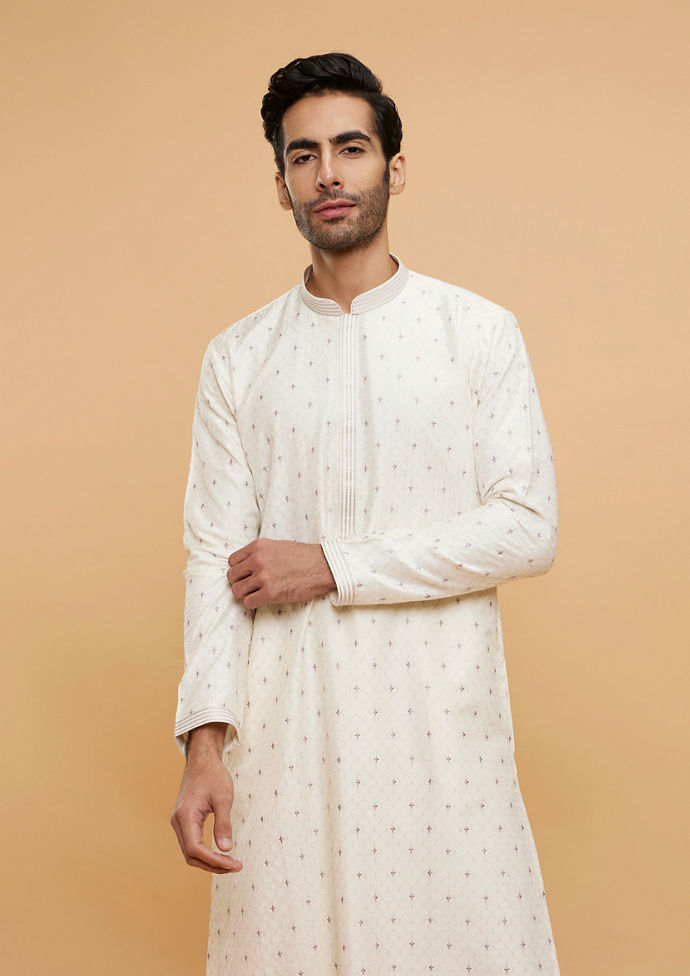
Each silk kurta for men below is listed with its name, the fabric and embroidery used, and the occasion it suits.
|
Product name
|
Key features
|
Best for
|
|
Black Silk Zardozi Embroidered Kurta Set
|
Silk base with zardozi embroidery
|
Wedding receptions and night ceremonies
|
|
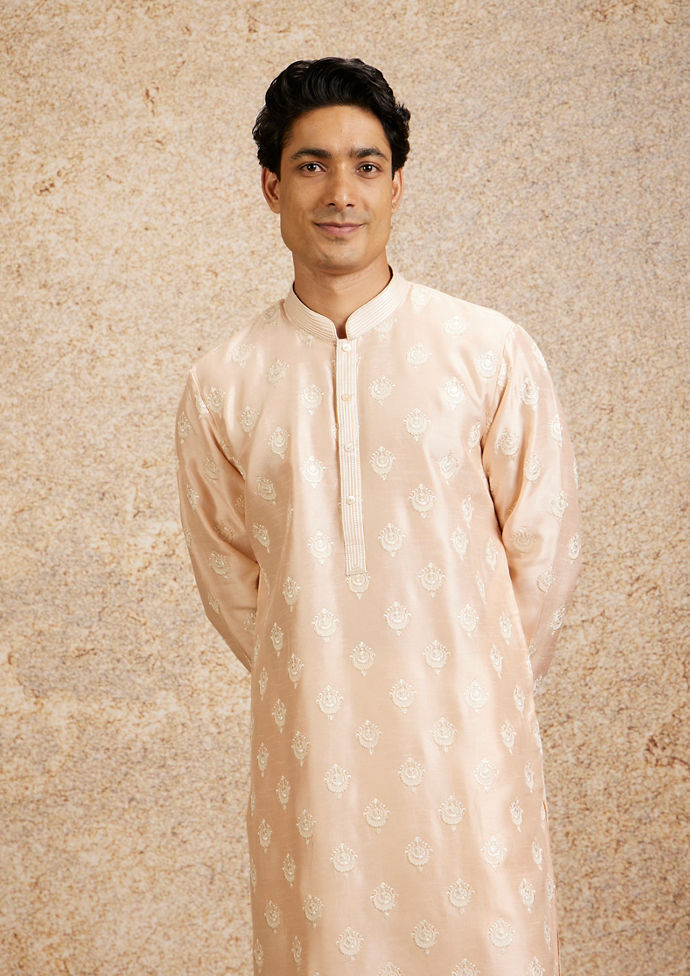
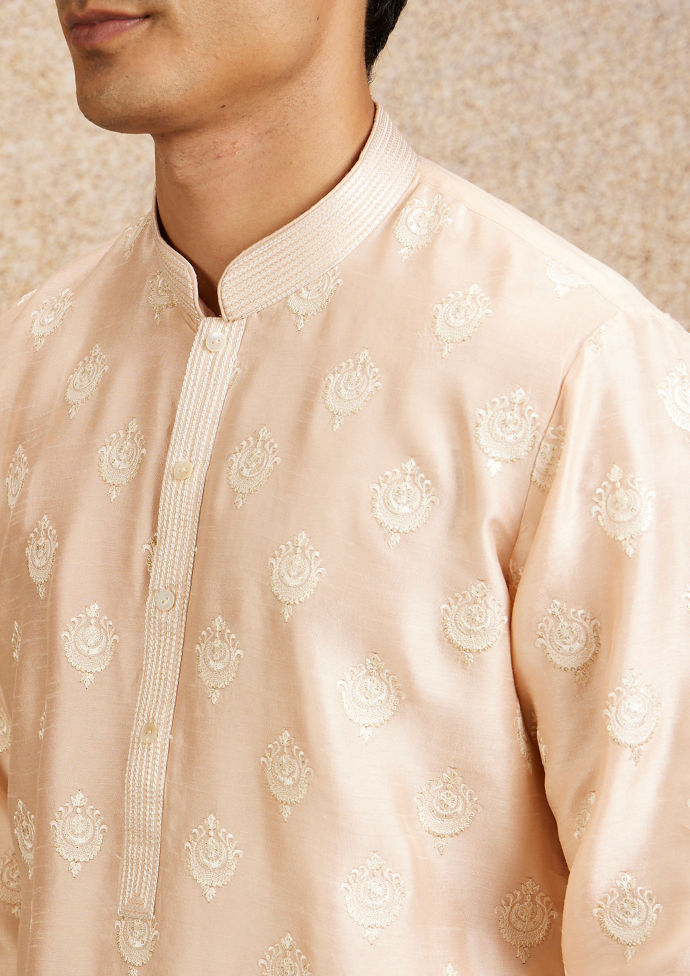
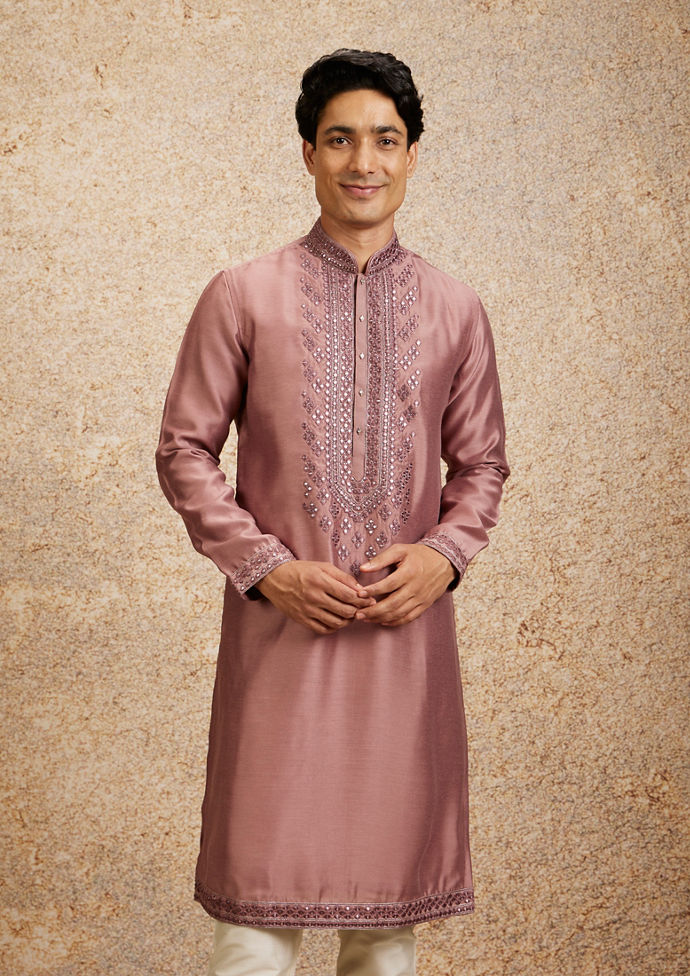
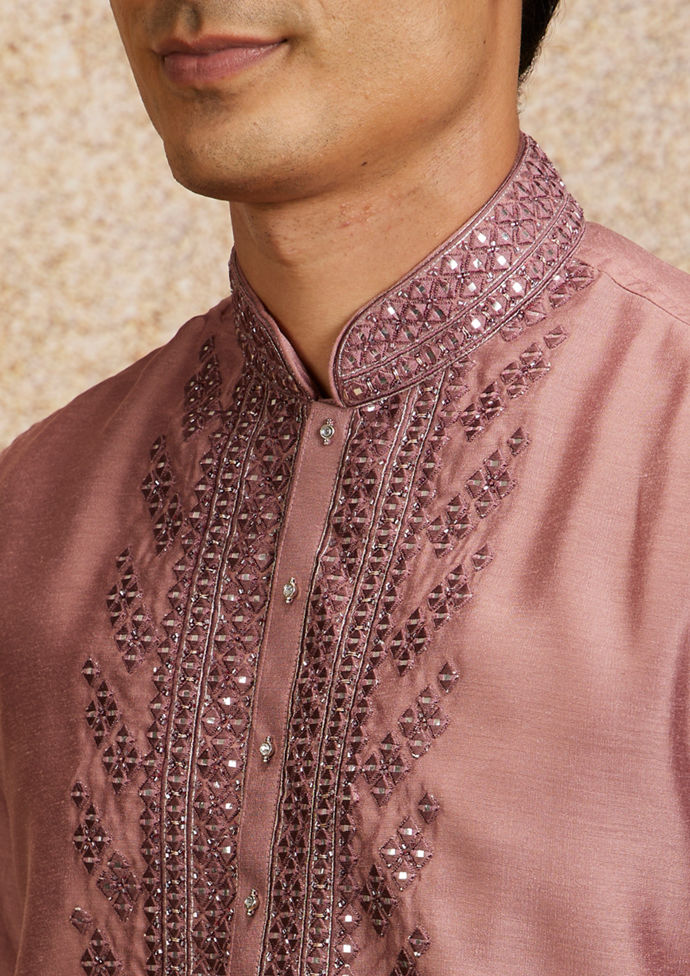
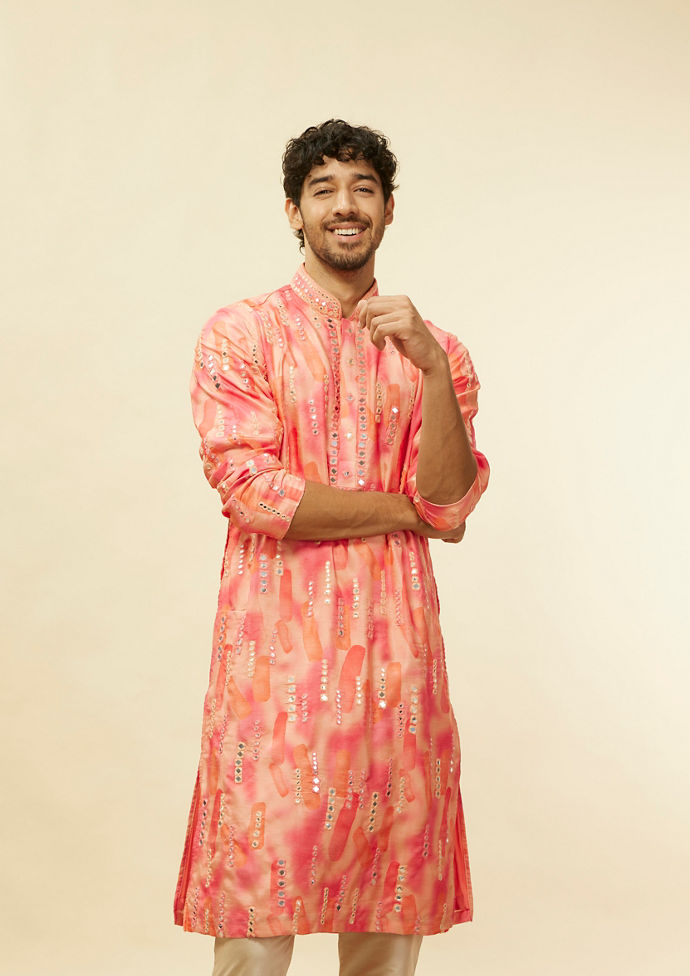
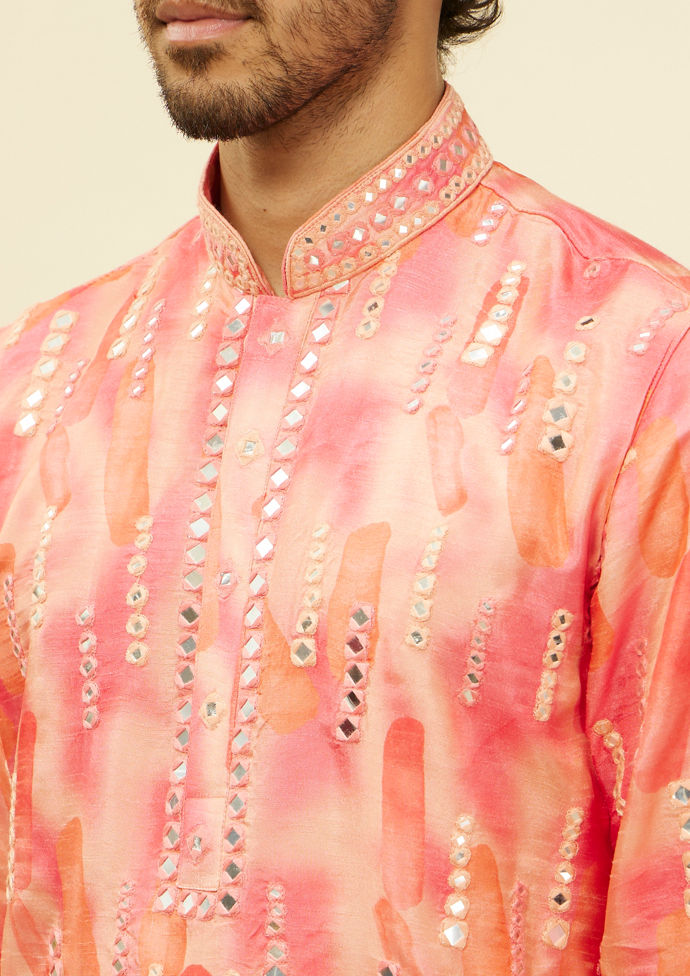
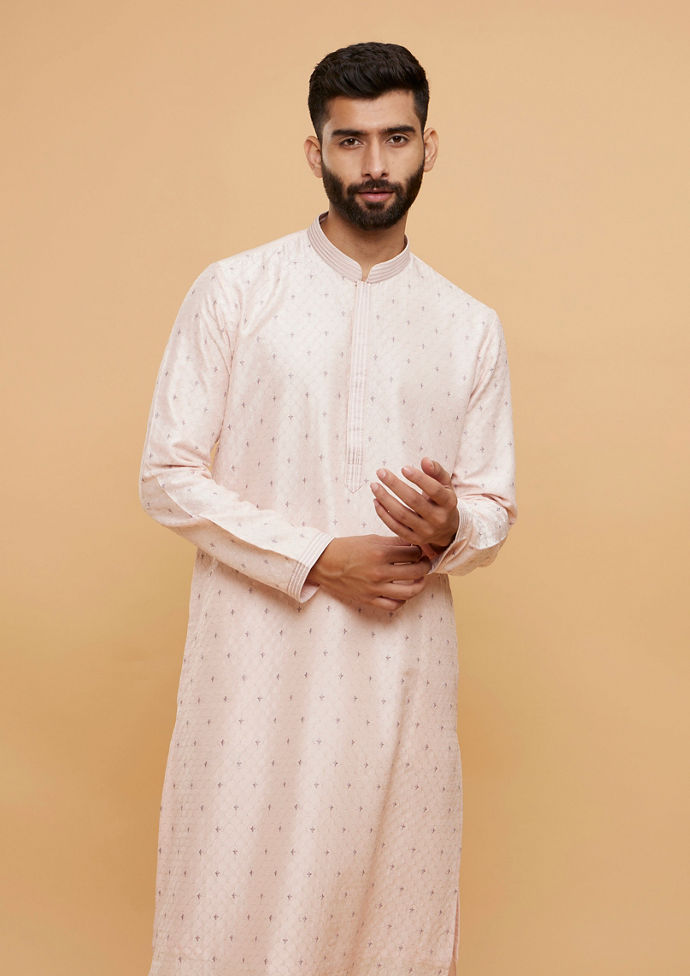
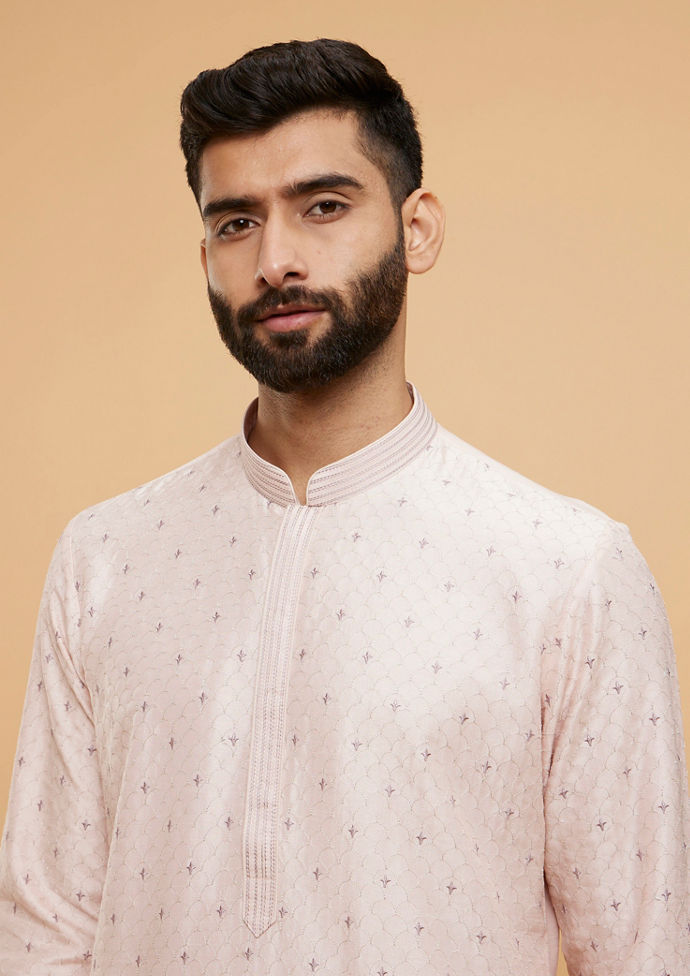
Pink & Cream Chanderi Embroidered Kurta Set
|
Chanderi weave with thread embroidery
|
Daytime weddings and engagement functions
|
|
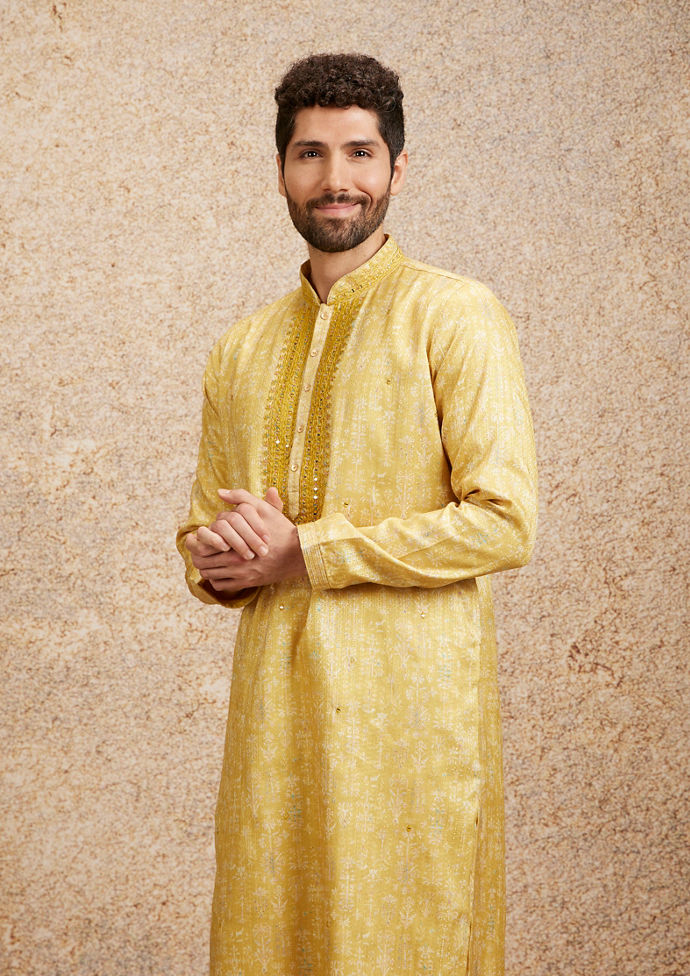
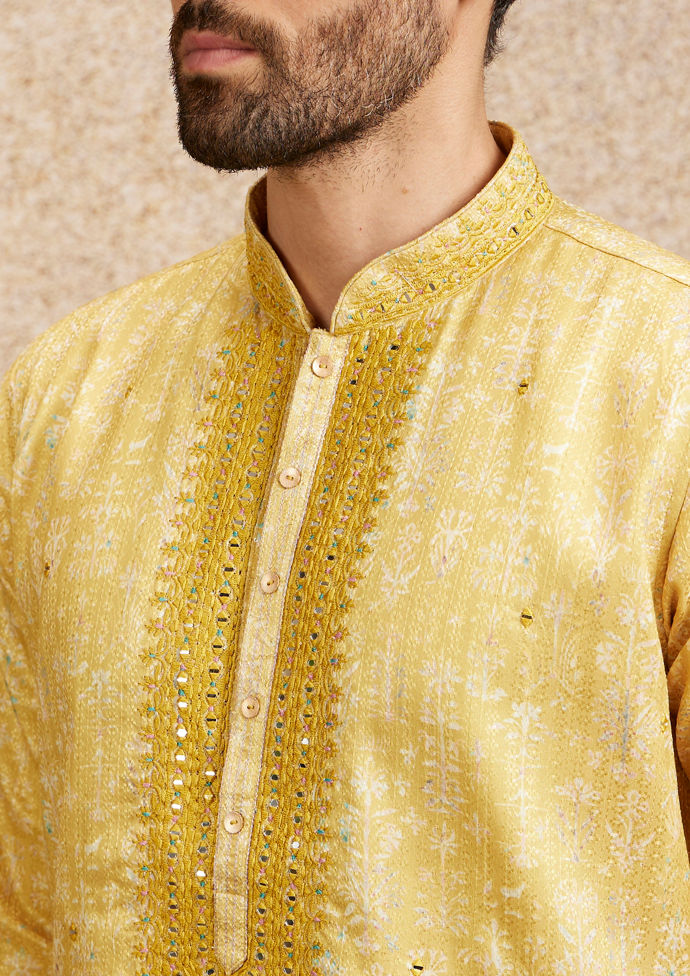
Mustard Georgette Embroidered Kurta Set
|
Georgette base with an embroidered front panel
|
Sangeet and mehendi
|
|
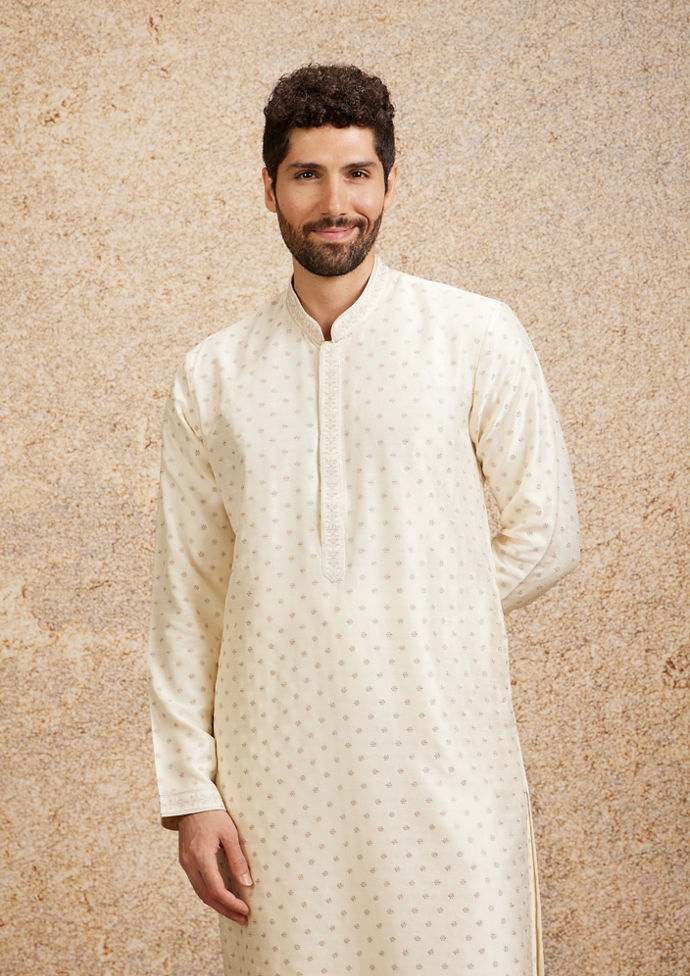
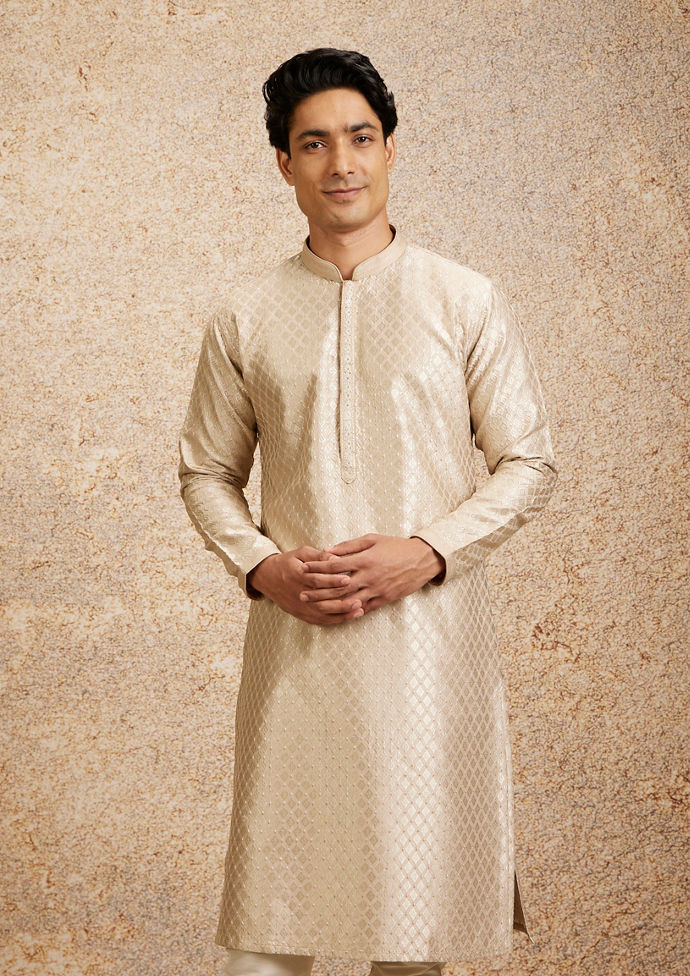
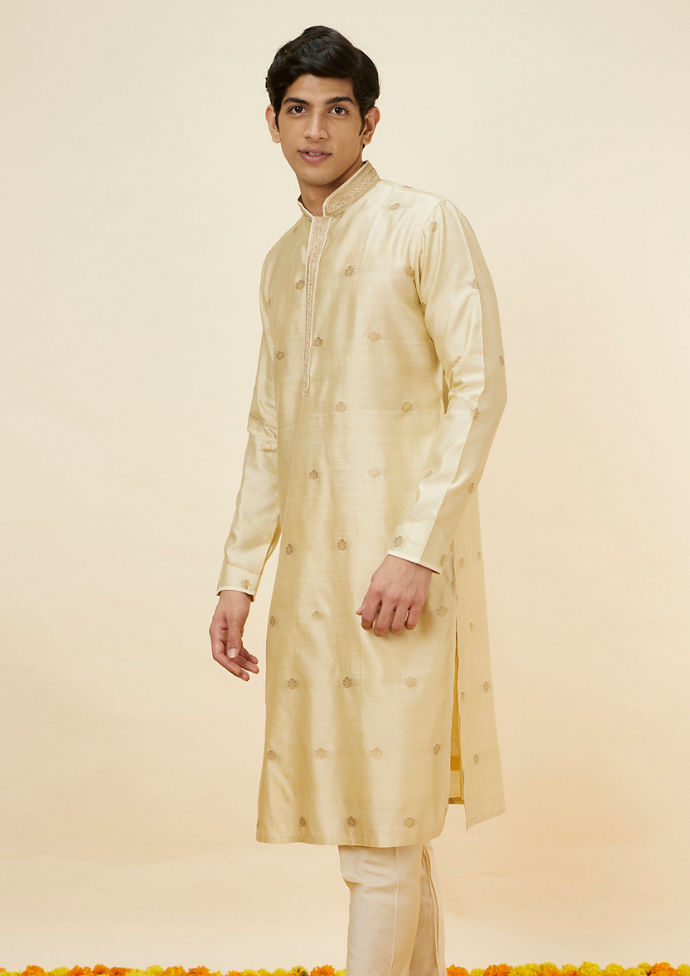
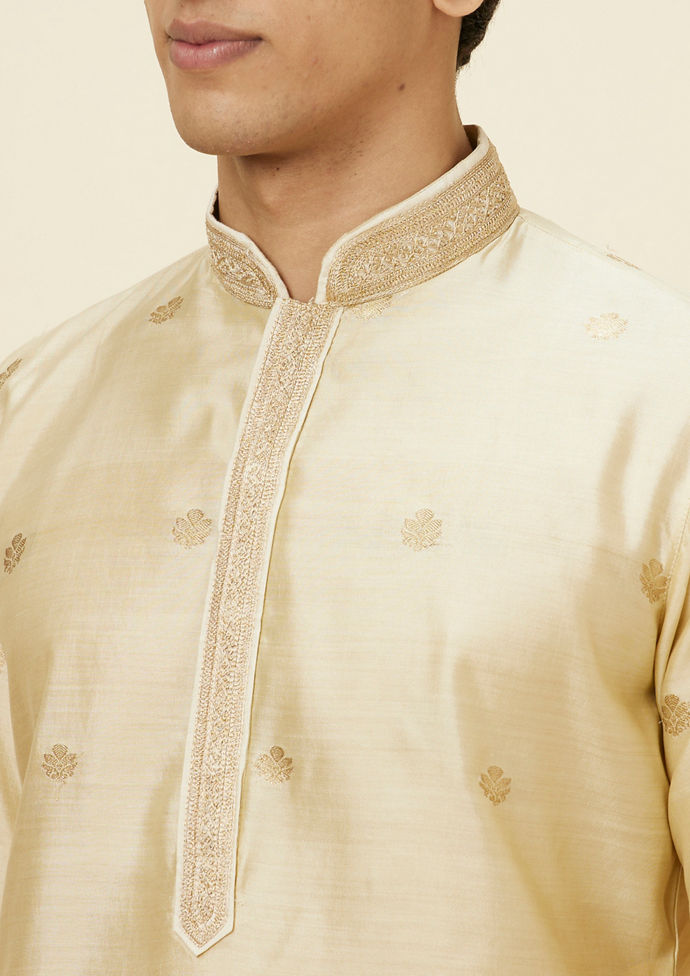
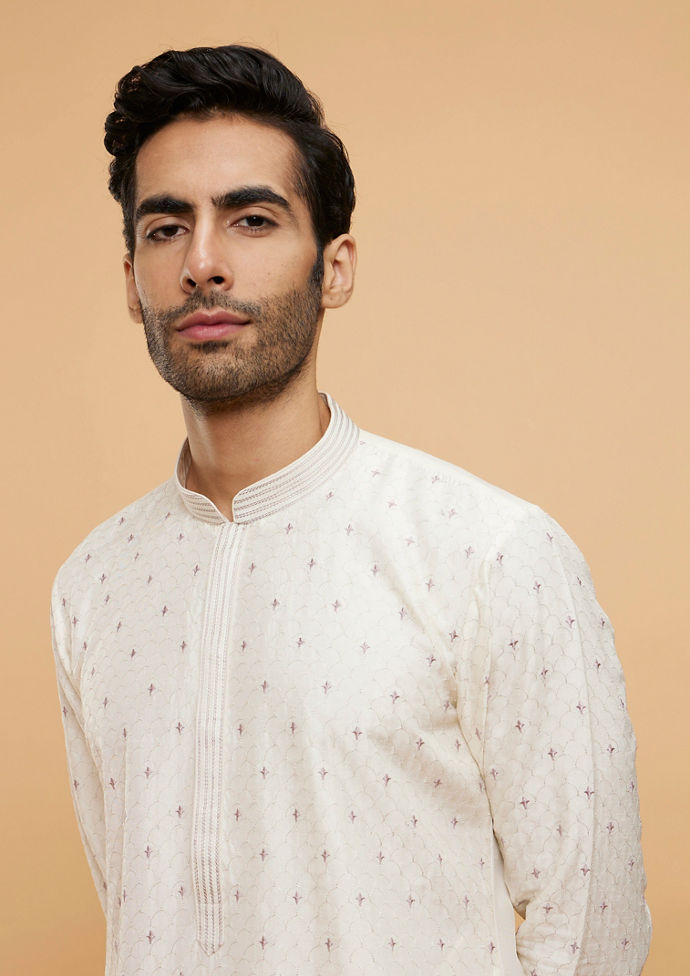
Cream Silk Sequin Embroidered Kurta Set
|
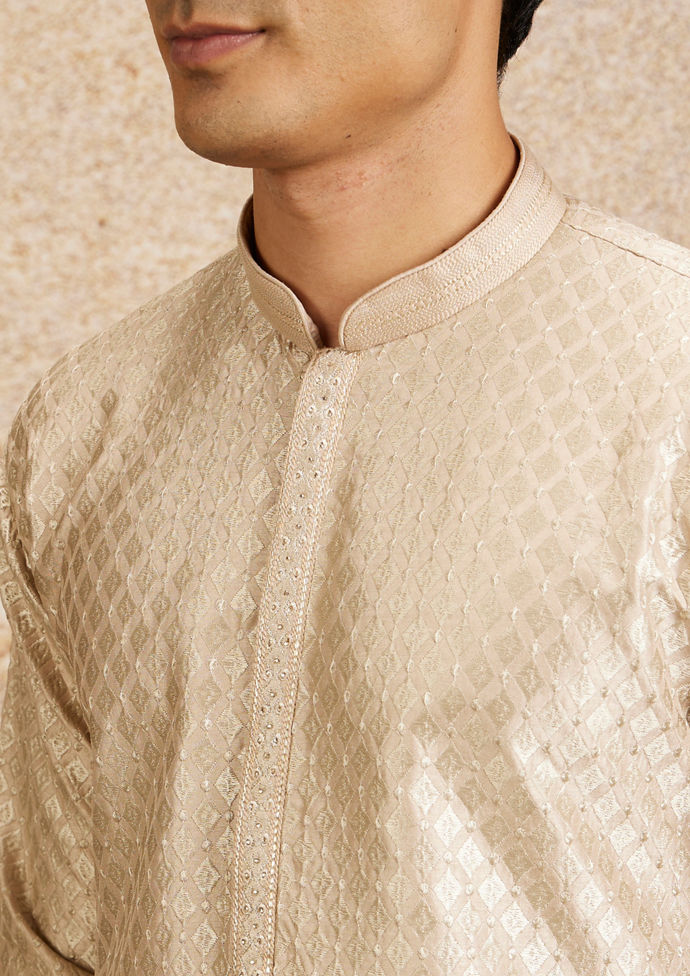
Silk base with sequin work
|
Receptions and evening celebrations
|
|
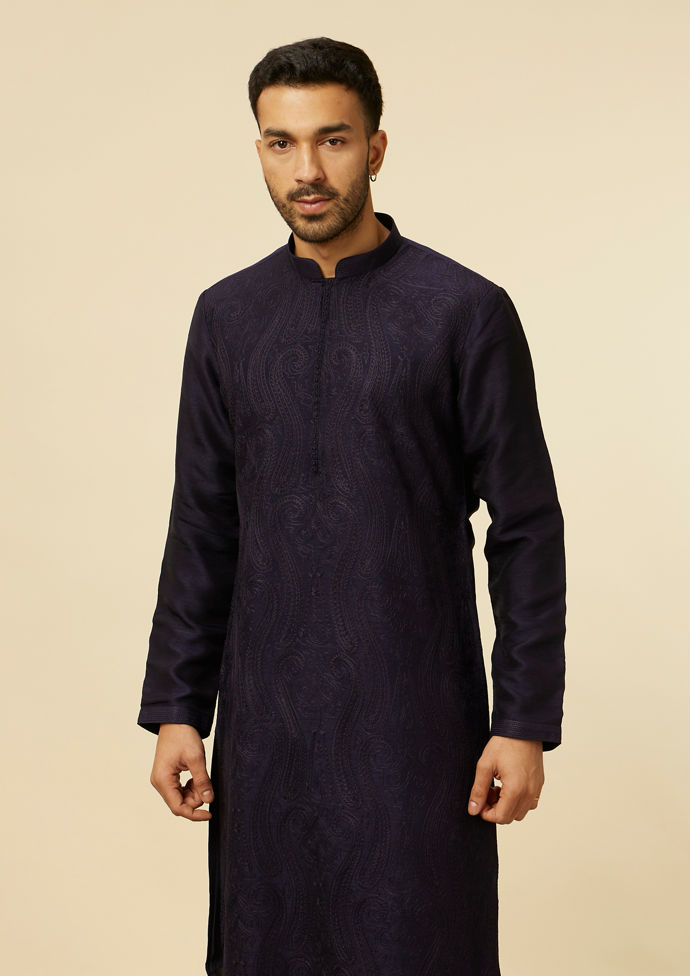
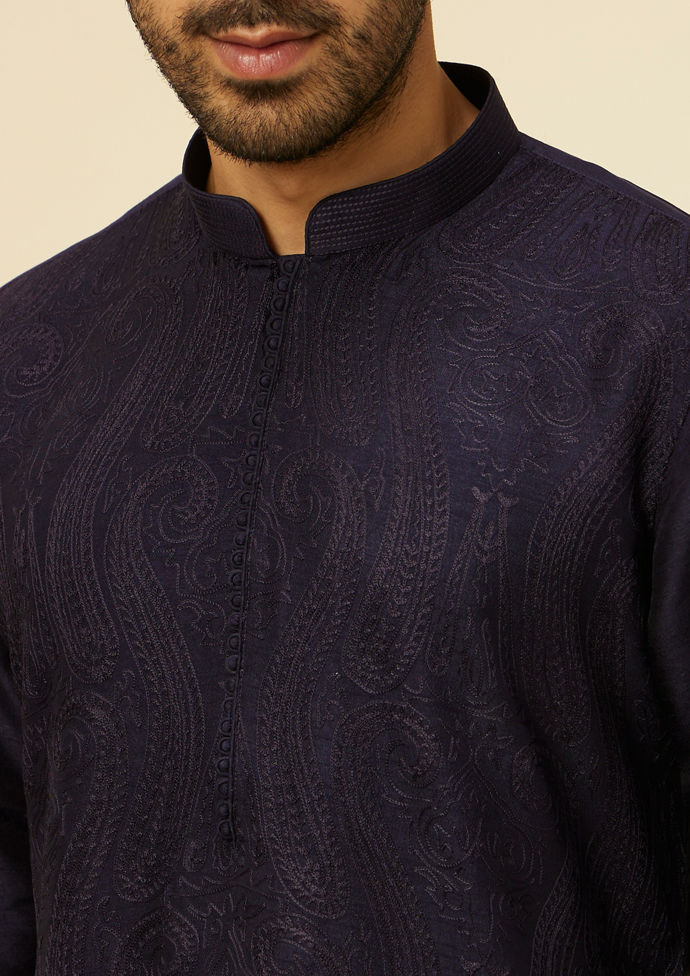
Dark Blue Silk Chikankari Embroidered Kurta Set
|
Silk base with chikankari thread work
|
Festive gatherings and puja
|
All five sets are dry clean only, so plan ahead for a cleaning run before a back-to-back wedding weekend.
Banarasi and Chanderi kurtas for grooms and wedding guests
Chanderi stays light, which suits grooms and guests at daytime weddings. Banarasi silk drapes heavier and holds its shape under mandap lighting, so it works for the main ceremony.
Embroidered kurta sets in georgette and silk blends
Georgette and silk-blend sets carry resham or sequin embroidery across the front panel. That detail stays readable in low evening light, which matters once the lamps come on.
Black kurta for men and dark tones for night ceremonies
Black reads sharpest at night because dark tones absorb warm lighting instead of washing out. Dark blue and wine behave the same way.
A black zardozi set covers receptions and cocktail dinners, while the dark blue chikankari set fits festive evenings and puja. Dark tones also hide creases and travel marks better than cream or pink, which helps when one wedding stretches across three days. When a function begins before sunset and moves indoors, the embroidery on a black silk kurta keeps its contrast under mixed light instead of flattening out the way a plain weave can.
For a silk kurta for men wedding wardrobe, one dark set is usually enough. Wear it with a churidar or slim pyjama in the same tone, then add a dupatta in ivory or gold for separation against a dark sherwani or Nehru jacket. Dark green and maroon sit in the same family if black is already taken by the groom's side of the family.
How do you choose the right men's silk kurta for your occasion?
Step 1 match silk type to season and venue
Start with the weave. A Banarasi kurta for men runs 100 to 150 gsm, heavy enough to hold its shape through a long evening in an air-conditioned banquet hall. Plain silk is lighter and sits better at a daytime ceremony outdoors.
Step 2 pick a size using chest and kurta length measurements
Go by your chest measurement and ignore the tag. Sizes run 40 to 44 inch at the chest, cut with 2 to 4 inches of ease, so the shoulders stay clear when you raise an arm.
Step 3 set your embroidery and colour by ceremony
Zardozi fits an evening reception. Resham thread work reads cleaner at a daytime sangeet. Ivory and cream suit a puja, and deep wine holds up at a night function.
Step 4 pair with churidar, pyjama, or dhoti
The bottom changes the look. A churidar sharpens a wedding outfit, a straight pyjama stays comfortable through a full day of standing, and a dhoti fits South Indian ceremonies. Our kurta pajama sets for men cover the first two.
Shop by fabric, neckline, and occasion
Silk types Banarasi, Chanderi, georgette, and raw silk
Banarasi and raw silk are structured and hold their shape well at 100 to 150 gsm. Chanderi and georgette feel lighter and more fluid at 60 to 90 gsm.
Necklines and sleeves mandarin collar, bandhgala, full sleeves
A mandarin collar sits high and close to your neck. Bandhgalas add a closed jacket layer over the main garment. Full sleeves reach down to your wrist.
Embroidery levels from minimal thread work to full zari
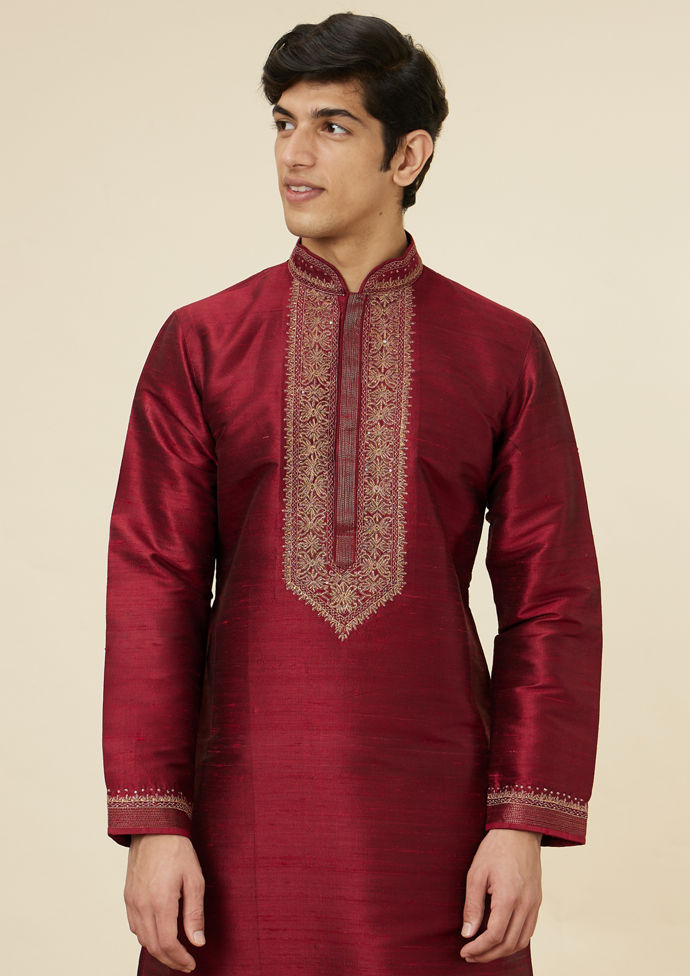
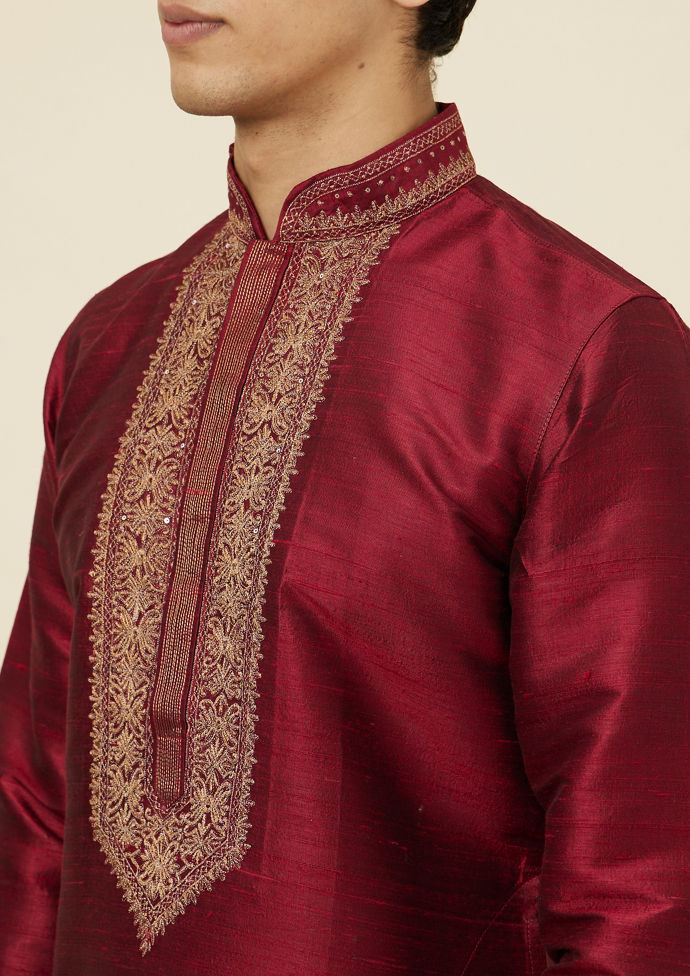
Minimal embroidery uses single-line threadwork on the front placket and collar edges, ideal for understated daily wear. Resham thread work outlines plackets and cuffs with delicate detail using silk threads. Mid-level embroidery adds geometric or floral patterns across the chest and sleeves using a mix of silk and metallic threads. Heavy zari work layers metallic gold or silver thread densely across the front, back, and shoulders, creating a formal look suited for weddings and ceremonial occasions.
Occasion filters for wedding, festive, and ceremonial wear
Wedding pieces feature heavy zari and rich embroidery, often in deep jewel tones like maroon, navy, or forest green. Banarasi silk kurtas for men's wedding ceremonies combine structured fabric with intricate metallic detailing. Festive sets use lighter embroidery work with brighter colors such as gold, cream, or pastel shades, allowing for comfortable all-day wear during celebrations. Ceremonial wear keeps embellishment minimal, often in ivory tones or subtle earth colors, with focus on the quality of the silk kurta rather than dense ornamentation.
Styling and care tips for silk kurtas
Pairing kurtas with nehru jackets, stoles, and mojaris
A silk kurta gains formal presence when layered with a Nehru jacket in matching or complementary fabric. Pair dark silk kurtas with structured jackets in velvet or raw silk for evening ceremonies, or choose lighter shades for daytime functions. Embroidered stoles draped over the shoulders add dimension without bulk. Mojaris in leather or embroidered fabric complete the look and follow traditional styling across Indian weddings and festive occasions.
Dry cleaning and storage that protects zari work
Silk kurtas with zardozi or metallic embroidery need dry cleaning only to preserve thread integrity and prevent tarnishing. Store in breathable cotton garment bags away from direct sunlight and moisture. Keep embroidered pieces flat or loosely rolled to avoid creasing delicate work, and avoid plastic covers that trap humidity and encourage mildew.
Ironing and travel folding before wedding functions
Iron silk kurtas on low heat with a pressing cloth to prevent shine and damage to embellishments. For travel, fold along seams rather than creasing the front, and pack in garment bags to minimize wrinkles. Hang immediately upon arrival to let any creases settle before wearing to wedding ceremonies or festive events.
Men's silk kurta FAQs
Will a silk kurta feel too hot at a summer wedding?
Silk breathes well and regulates temperature naturally, so it works in warm climates. Lighter fabrics like raw silk or dupion at 60 to 90 gsm feel cooler than heavier weaves, and a loose fit lets air move freely.
Can a black kurta for men work at a daytime haldi?
Black is better for evening and formal events. For daytime haldi celebrations, go with lighter shades like cream, ivory, or pastels, which match the festive mood better.
How do I check kurta length without trying it on?
Measure from your shoulder to your knee; a well-fitted kurta reaches 2 to 4 inches above the knee. When shopping online, compare your chest measurement to the size chart and check the listed length in centimeters before you order.
Explore More: Sherwani For Men, Silk Kurta for Men, Kurta Pajama for Men