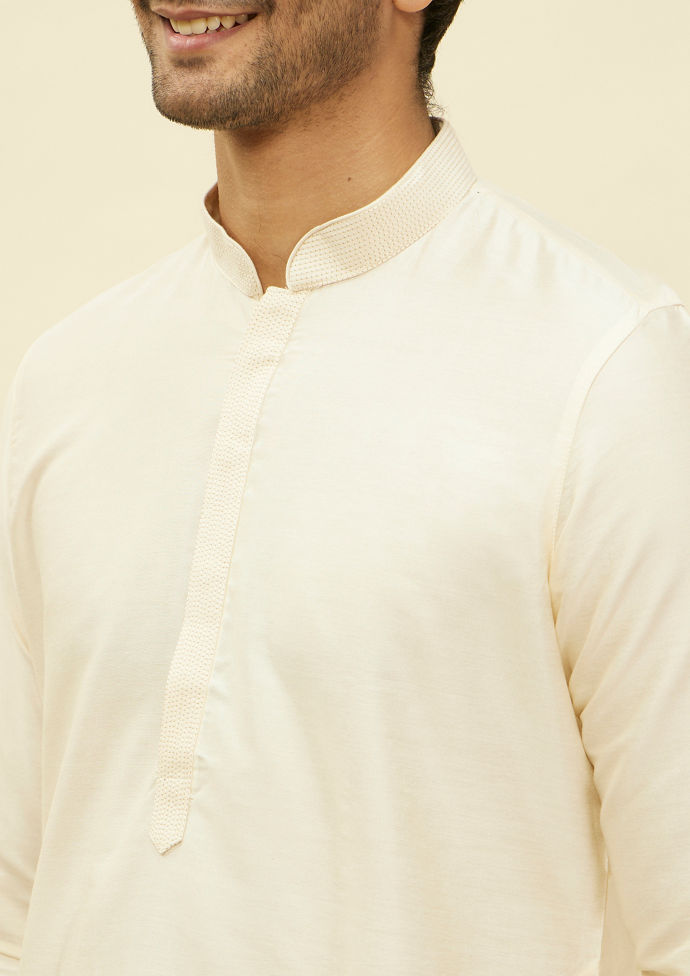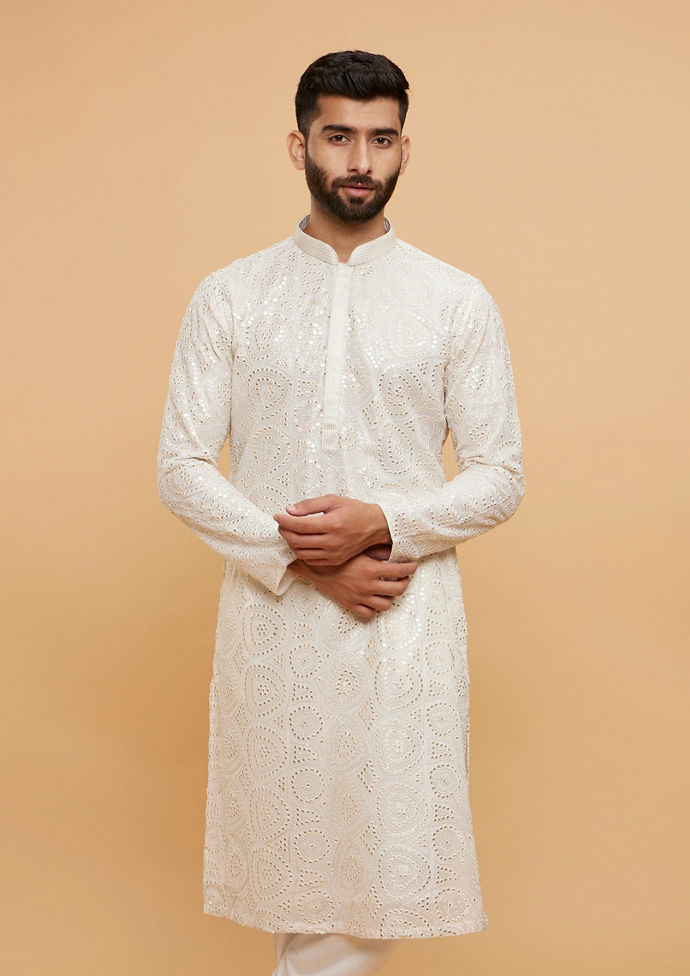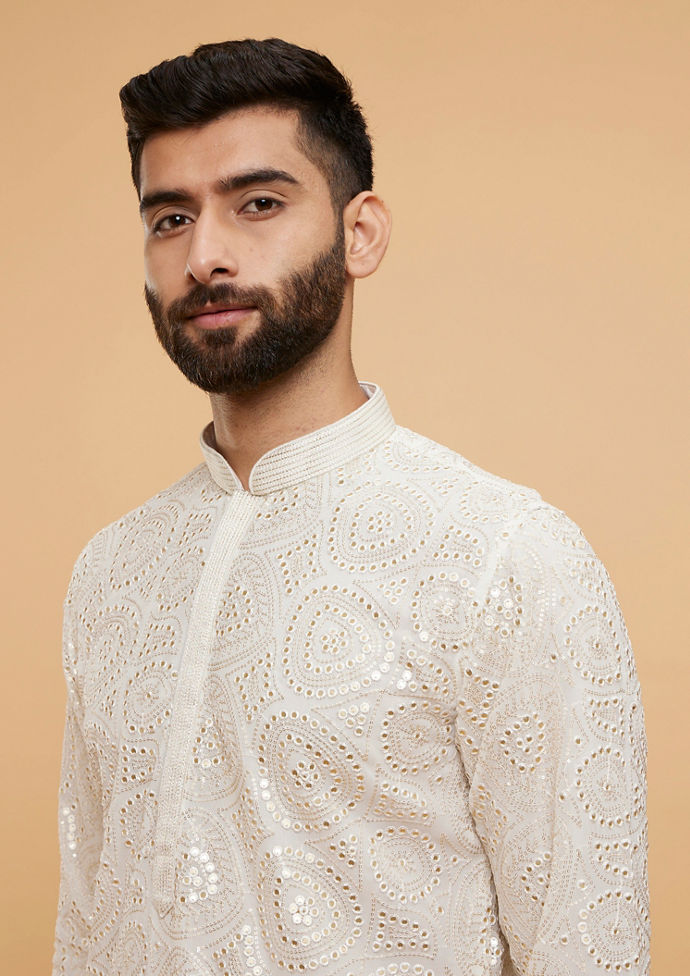
White Kurta For Men
61 PRODUCTS
Filter

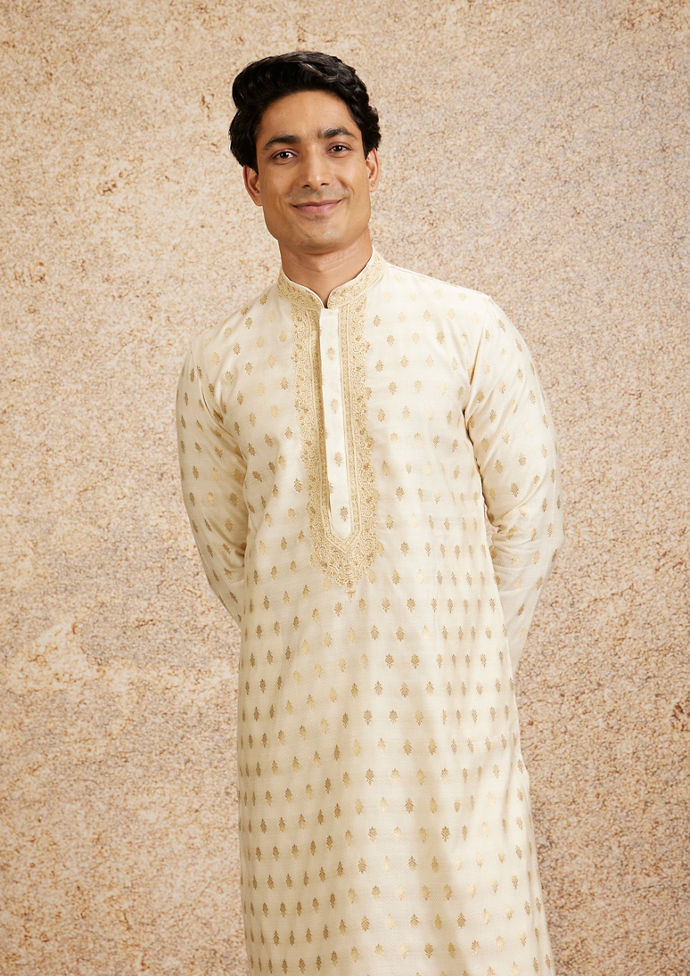
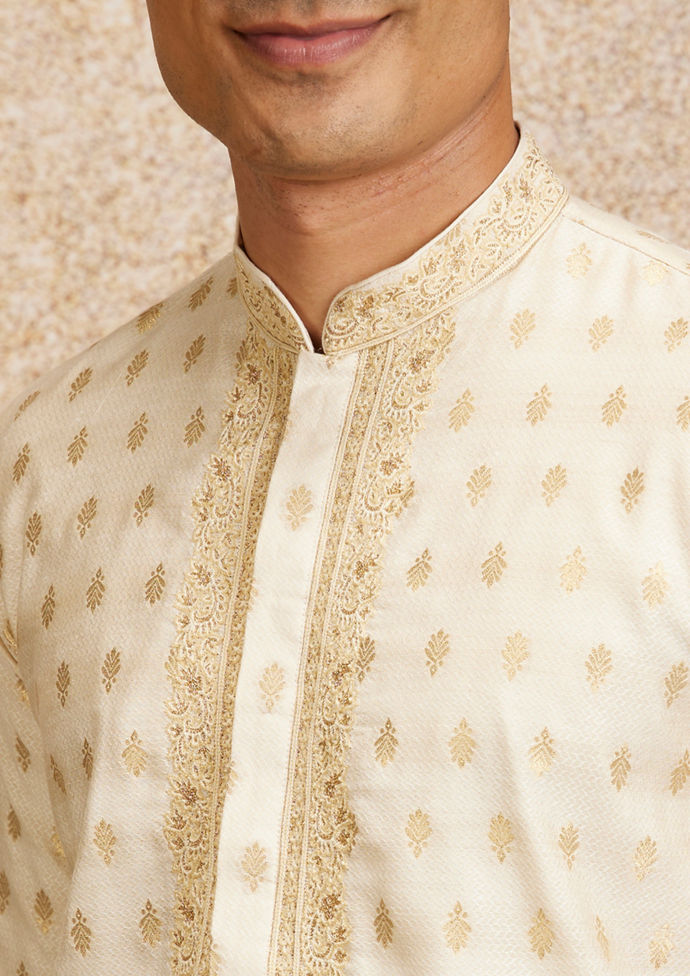
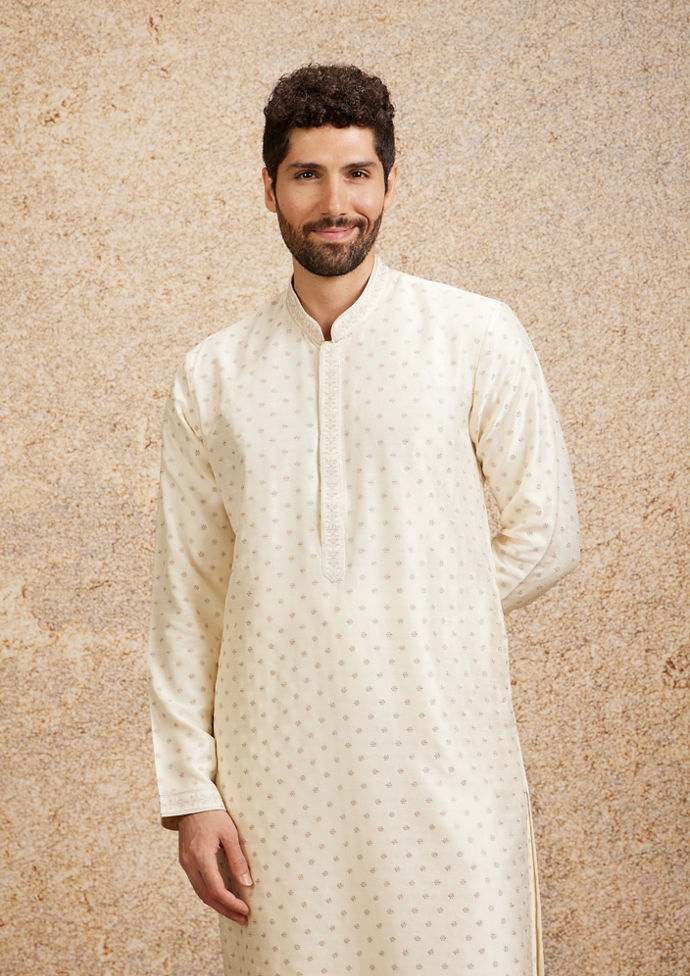
A white kurta for men works for weddings, pooja, haldi, and festive evenings because white keeps its formality in daylight and under warm mandap lights. Choose fabric first. Silk and brocade hold a crisp line through a long wedding function. Georgette, viscose, and satin drape lighter and suit daytime rituals. The collection has 81 styles, among them ivory and warm white sets with resham thread work, sequin embroidery, and mirror work. Care is dry clean only.
Shop Now: Yellow Kurta For Men
Twamev makes these kurtas for weddings and festival wear, so the detailing stays formal. Wear a straight kurta with churidar or pajama, or add a Nehru jacket for a reception. Here is what the collection holds.
White, short, straight-cut kurtas with mid-thigh to knee-length hems, 4–6-inch side vents, full-button plackets, and mandarin or spread collars. Excludes knee-length, A-line, angrakha, and coloured/printed styles. Choose by chest measurement with 2–3 inches of ease; if between sizes, size up.
Choose 120–160 GSM cotton poplin/cambric for good opacity; below 110 GSM may turn translucent. Linen (150–200 GSM) creases easily, while linen-silk blends (180–220 GSM) resist creasing and suit evenings.
Check for cotton-cambric linings, 10–12 stitches/inch, and pre-shrunk fabric with under 3% shrinkage. Avoid polyester lining and chlorine bleach; wash whites separately and use oxygen bleach for stains.
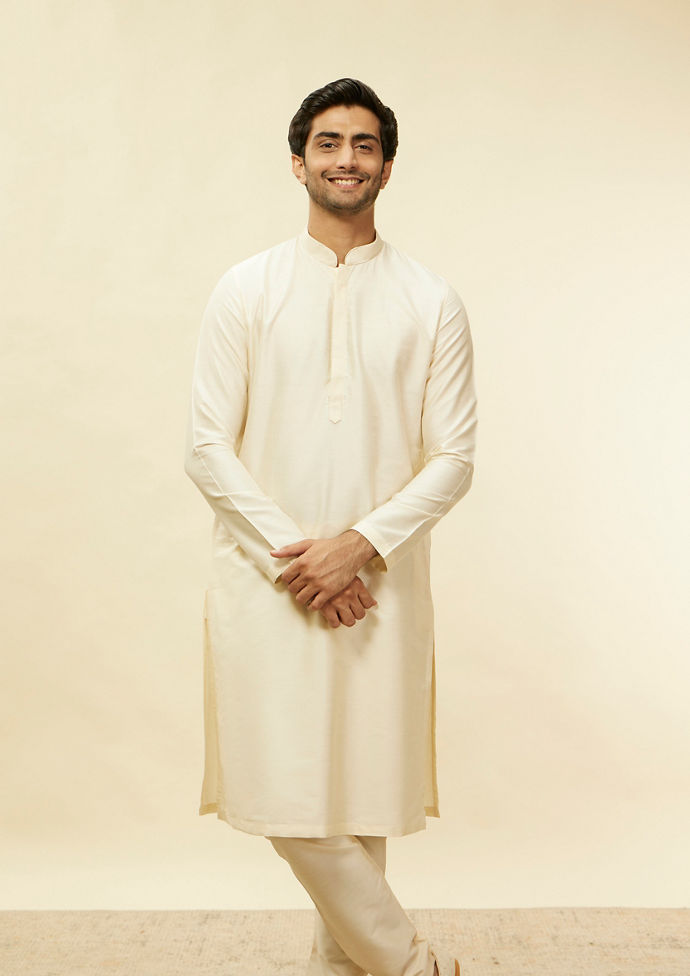
A white kurta is standard dress for a daytime wedding, a temple visit, a pooja at home, a naming ceremony, and a sangeet where the dress code is light. For pheras and receptions it reads formal when the fabric has body: white-on-white jacquard, chikankari on cotton, or a linen-silk blend under a Nehru jacket. Pair a plain poplin kurta with a churidar or a pyjama in the same white, and keep the footwear simple, since white shows scuffs and dust faster than any other colour you could pick.
Haldi is the one function that needs a warning. Turmeric paste stains cotton and linen on contact, and the mark sets once the fabric meets heat from an iron or a dryer, so a white kurta worn to a haldi is a white kurta you may not get back. Wear it to the haldi only if you accept that risk, and treat any stain immediately with cold water and oxygen bleach before it dries. For the mehndi and the main ceremony, white holds up well, and it photographs cleanly beside marigold, red, and gold decor.
Pick 120 to 160 gsm viscose for haldi, 180 to 220 gsm silk for receptions. Lighter viscose moves air during a daytime function and wrinkles less after hours of sitting. Silk at 200 gsm and above holds its shape through a long evening and photographs with more body, though it traps heat indoors.
Allow 4 to 6 inches of chest ease over your body measurement, which leaves room for a churidar drape and arm movement during aarti or dancing. The shoulder seam should sit on the bone rather than past it, and the hem should fall 2 to 3 inches below the knee. Measure the kurta length from the shoulder point down, and check it against a kurta you already wear well.
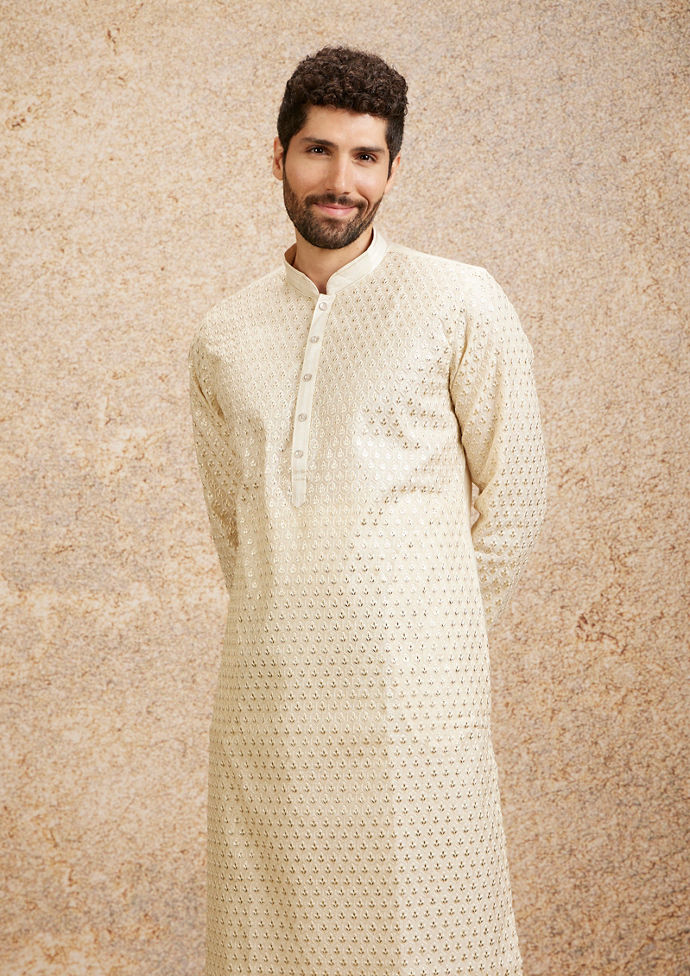
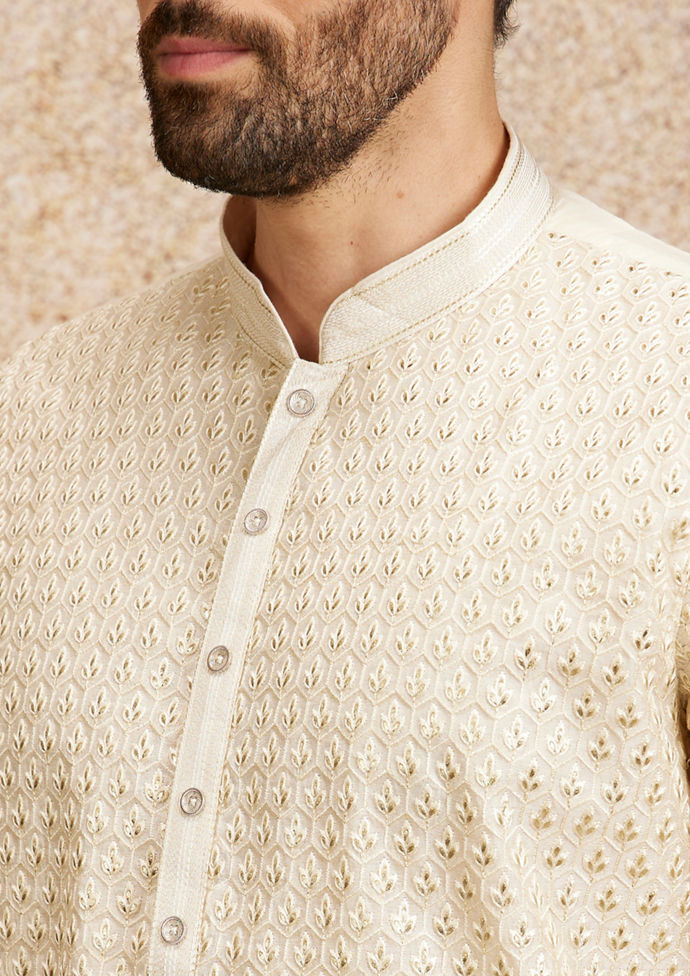
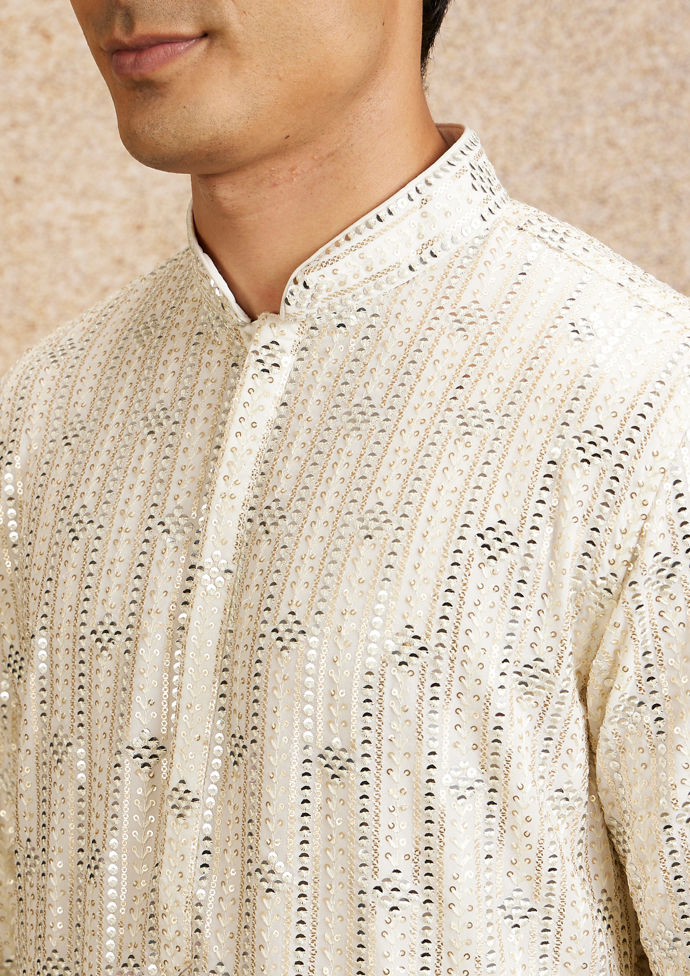
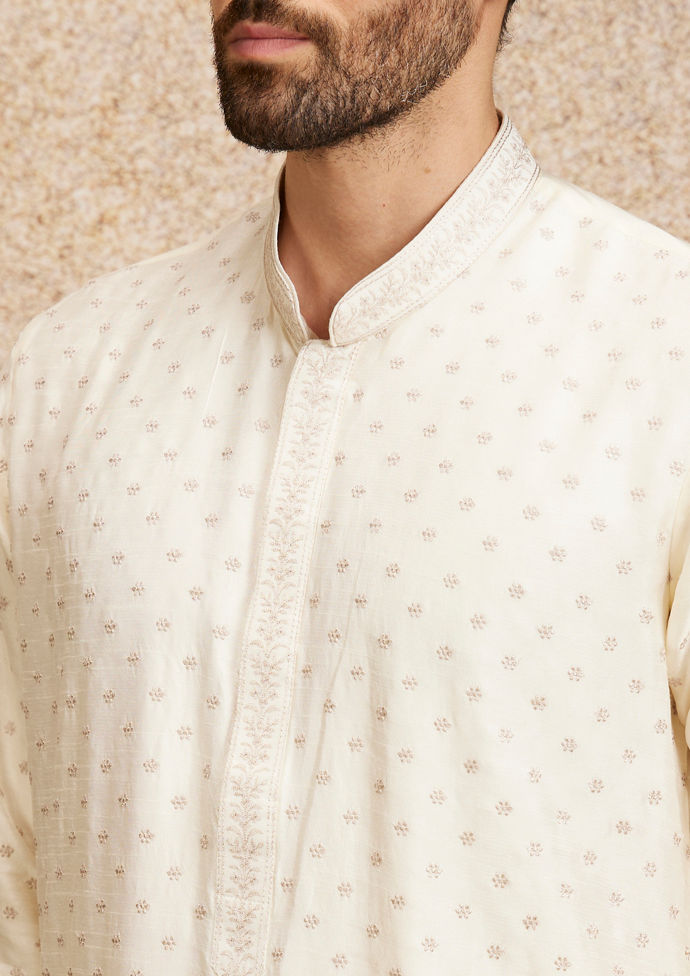
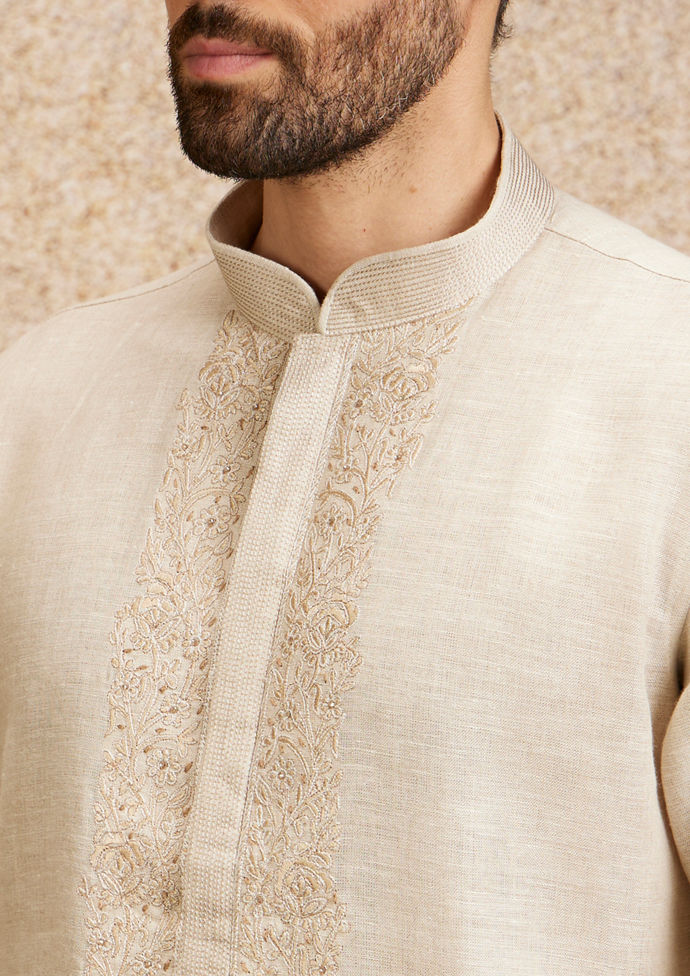
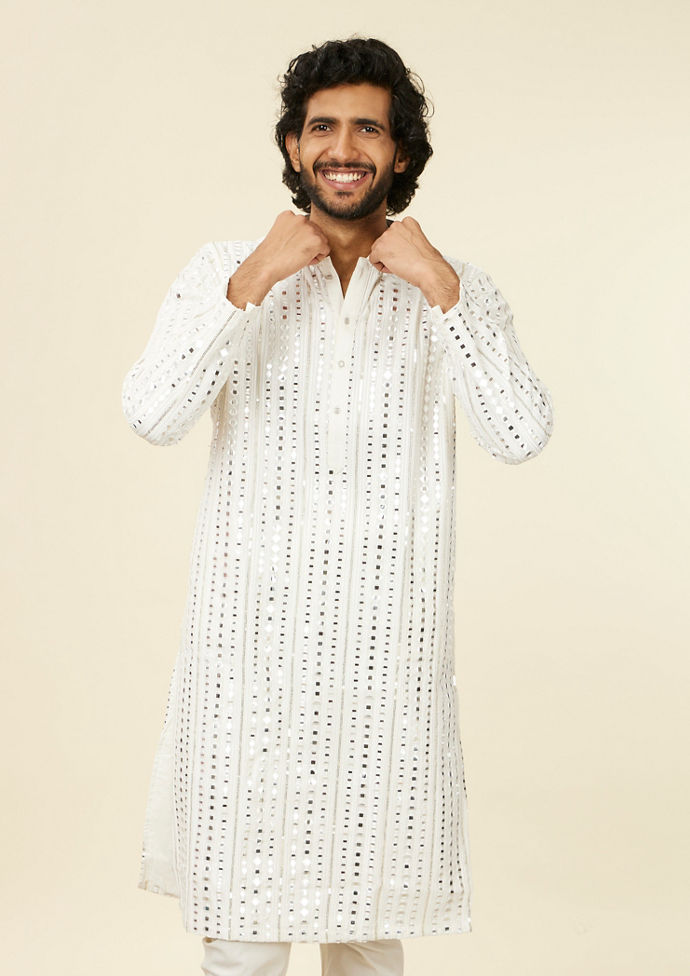
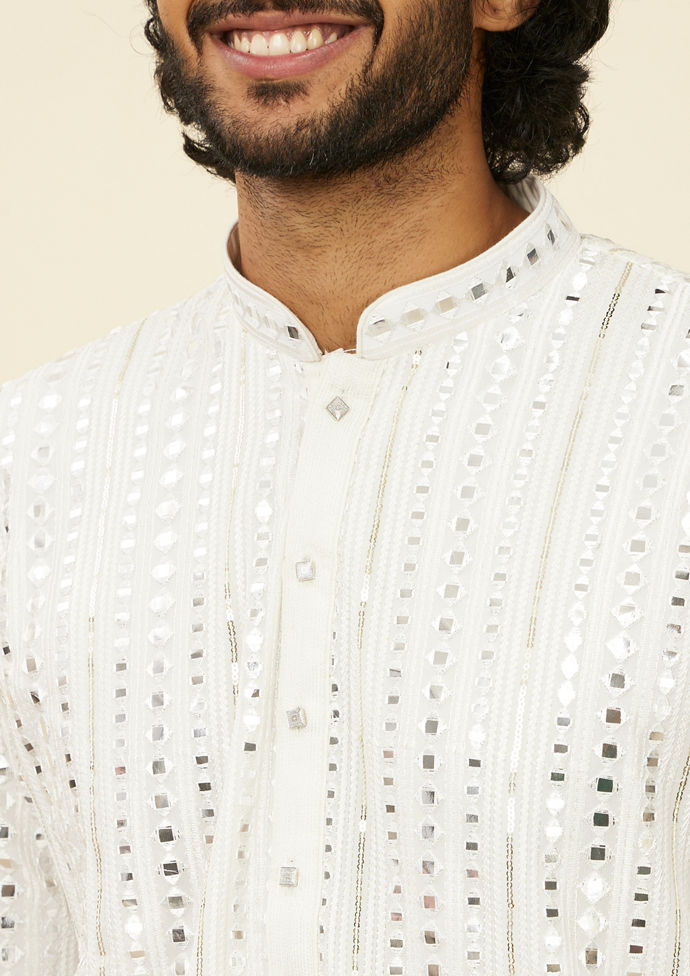
A white kurta for men with resham thread embroidery suits a pooja or a daytime family function, where the stitching reads clearly but stays understated. Sequins and mirror work belong at a sangeet or reception, since they catch stage and string lighting. Match the thread colour to the white or keep a tonal contrast of one shade, then leave the rest of the outfit plain.
Check the set has a churidar or pajama before you buy, because many listings sell the kurta alone. Note the lining, since a lined silk kurta sits differently than an unlined cotton one and adds warmth. Follow dry clean only labels on silk and embellished pieces; viscose and cotton blends usually tolerate a cold hand wash, so read the label on your specific kurta.
Fabric decides how a white kurta sits on your shoulders. Silk keeps a structured line and holds a pressed finish through a long ceremony. Georgette falls lighter and moves with you, which helps on humid afternoons. Cotton blends breathe better than silk and carry less weight across a full day.
Embellishment narrows the list faster than any other filter. Resham thread work stays quiet and only shows its detail up close, so it fits daytime functions. Sequin catches reception and stage lighting, which makes it read bolder in photographs. A plain weave with no embroidery is the easiest to repeat across several events.
Match the piece to the event and options drop quickly. Haldi and mehndi run through the day and often outdoors, so lighter weaves in cotton blends hold up best. Pooja and Eid take a soft sheen, and georgette or silk with light resham suits both. Wedding wear carries the heaviest embroidery, usually on silk, because the cloth has to support the weight.
Wash within 24 hours of wear so sweat and food stains do not set into the fibres. Use cold water at 30°C or below with a mild liquid detergent, and skip chlorine bleach, which yellows cotton over repeated washes. Wash white pieces separately from coloured clothes, turn the kurta inside out, and dry it in shade rather than direct sun. For storage, fold along the existing creases, place it in a breathable cotton bag or muslin cover, and keep it away from direct light and from plastic that traps moisture. Iron on the reverse at medium heat, and let the garment cool before folding it back.
Two days before the event, put the kurta on and check the shoulder seam sits at the edge of the shoulder bone with about 1 to 1.5 cm of ease for arm movement. Confirm the hem falls evenly at the length you want, and mark any side that rides up. Check every button for a loose thread and re-stitch any that moves, since a missing button on white fabric is hard to hide. Press the collar and placket flat, hang the kurta on a hanger overnight, and pack a spare button and a small stain pen for the day itself.
Most white kurtas ship as a two-piece set with a matching pyjama, but plenty of listings sell the kurta on its own. Read the item title and the "includes" line before you pay: a set names both pieces, and the pyjama is usually cotton or a cotton blend. Churidar sets turn up more often with darker shades than with white.
Unlined white cotton under roughly 100 gsm will show what you are wearing underneath, so hold the fabric against a lamp or window before you commit. Ask the seller whether a cotton lining runs through the body or only the yoke. For a pooja or a daytime wedding, a lined kurta in cotton cambric, poplin or handloom cotton keeps its shape and stays opaque.
Yes, and the styling does most of the work. Choose a kurta with sequin, mirror or thread work kept to the placket, yoke and cuffs so the white still reads as white. Add a Nehru jacket in ivory, black or navy, match it with a churidar or slim pyjama, and finish with juttis. Keep jewellery to a single piece, such as a brooch or a watch.
Wash the kurta before it goes into the wardrobe, because starch and body oils left on the cloth turn yellow over time. Dry it completely, then store it in a muslin or cotton cover rather than a plastic bag, which traps moisture. Keep it away from direct sun, which dulls the fibre with long exposure. Refold along different lines every few months so the same creases do not set.
Explore More: Designer Wedding Wear for Men , Suit For Men , Indo Western Dresses For Men, White Silk Kurta for Men
White Kurta Price List
White Kurta
Price (₹)
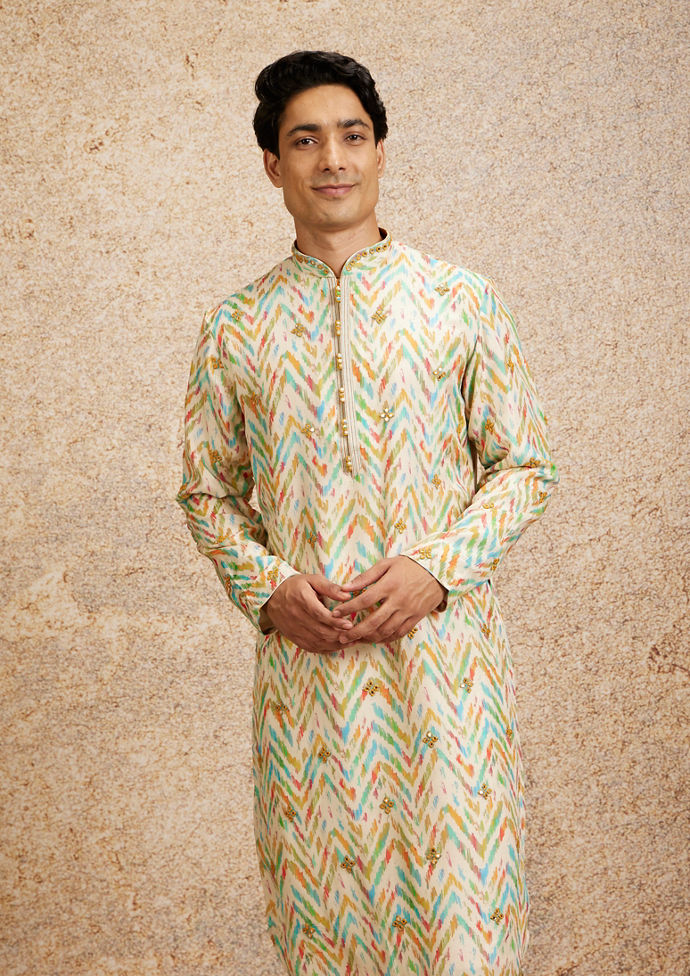
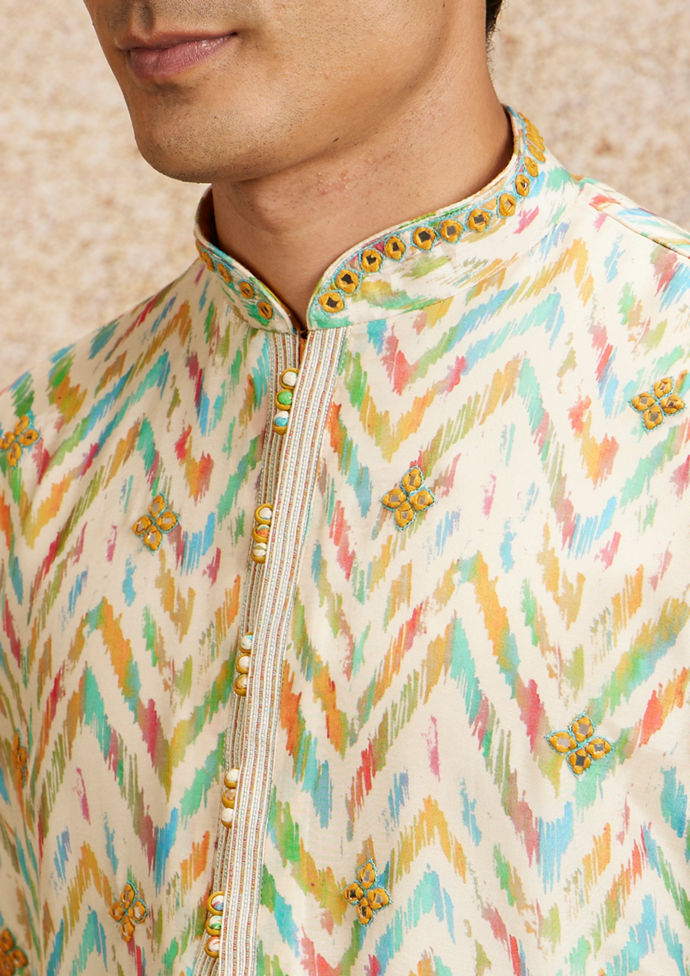
Beige Viscose Multicolour Chevron Printed Kurta Set
1,370 د.إ
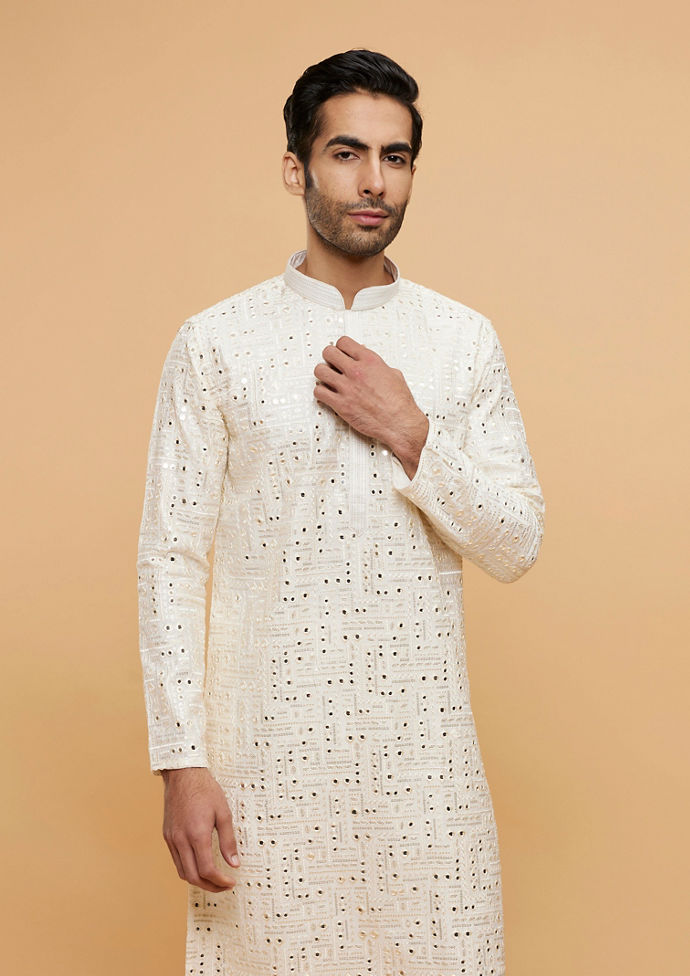
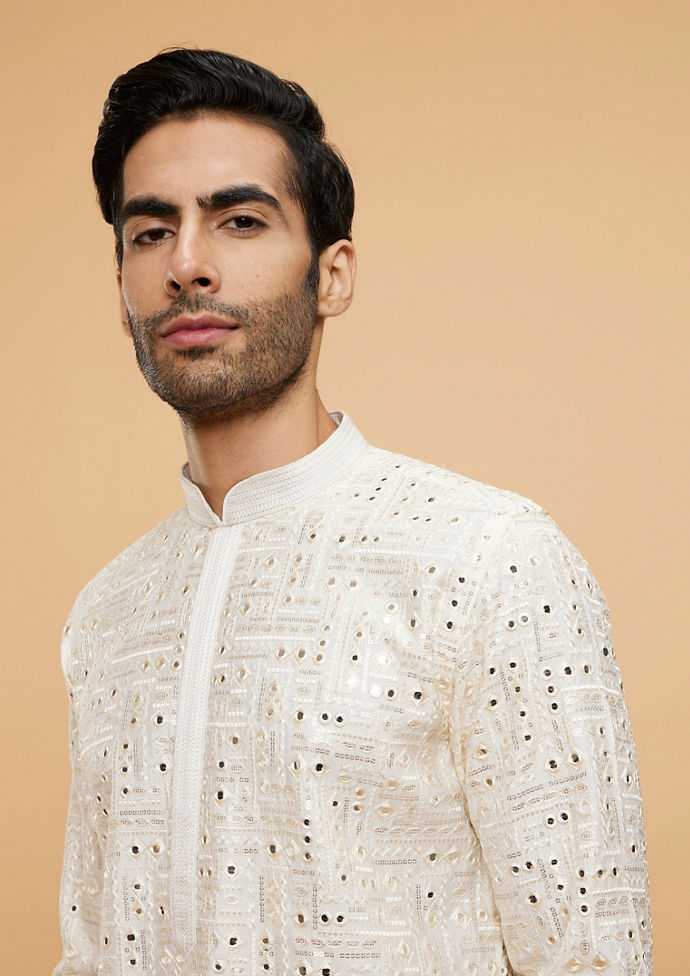
Warm White Viscose Mirror Embellished Kurta Set
600 د.إ
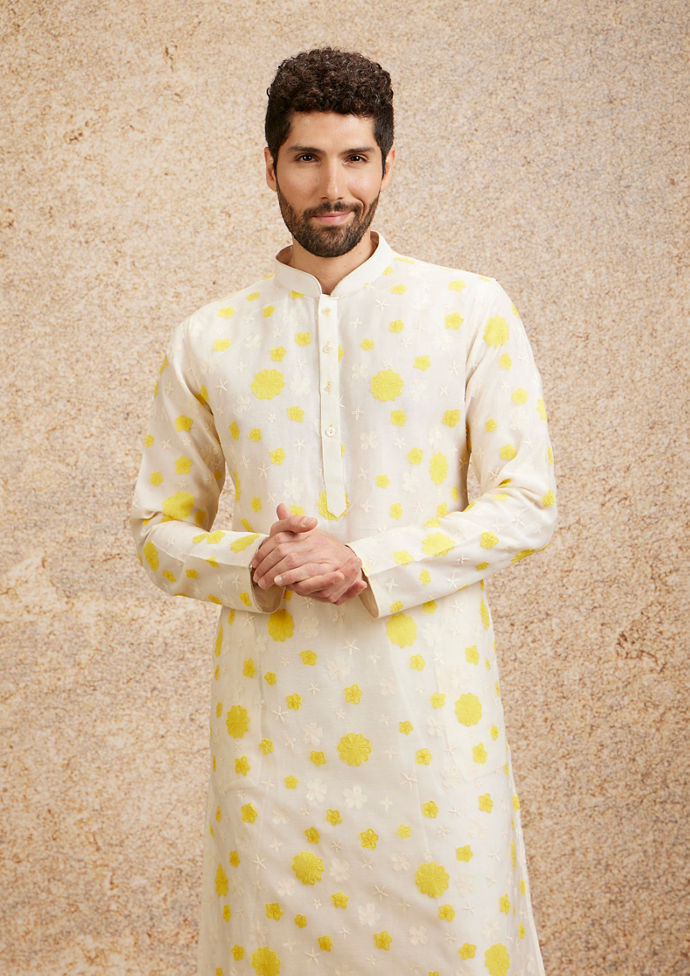
Ivory & Yellow Floral Applique Chanderi Kurta Set
1,370 د.إ
Ivory Silk Fern Buta Motif Woven Kurta Set
1,030 د.إ
Warm White Silk Chowkadi Motif Patterned Embroidered Kurta Set
855 د.إ
Ivory Silk Brocade Embroidered Kurta Set
770 د.إ
Warm White Silk Sequin Embroidered Kurta Set
1,115 د.إ
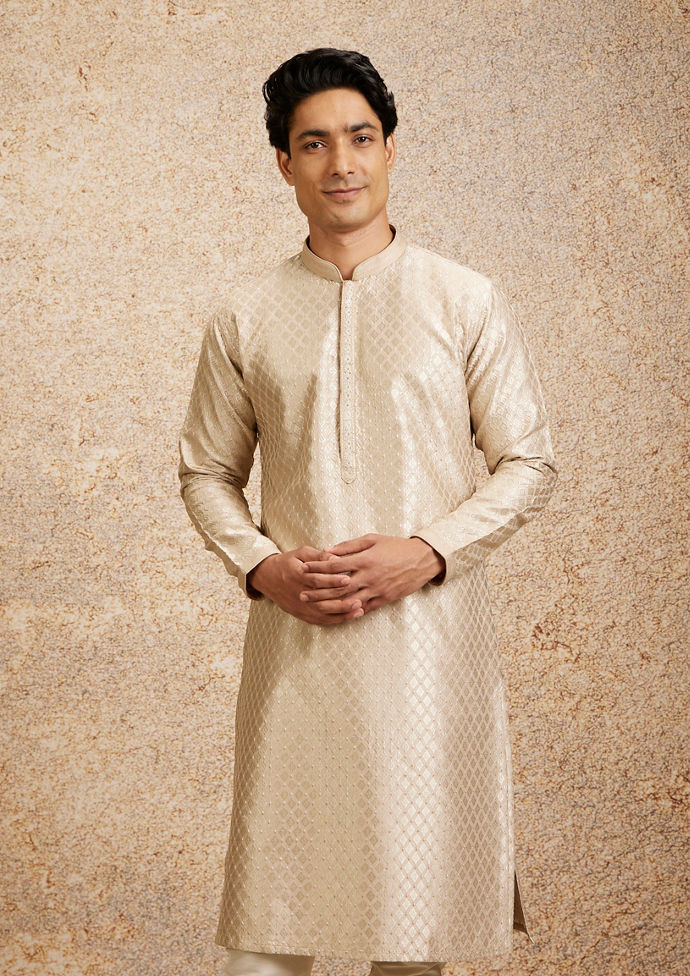
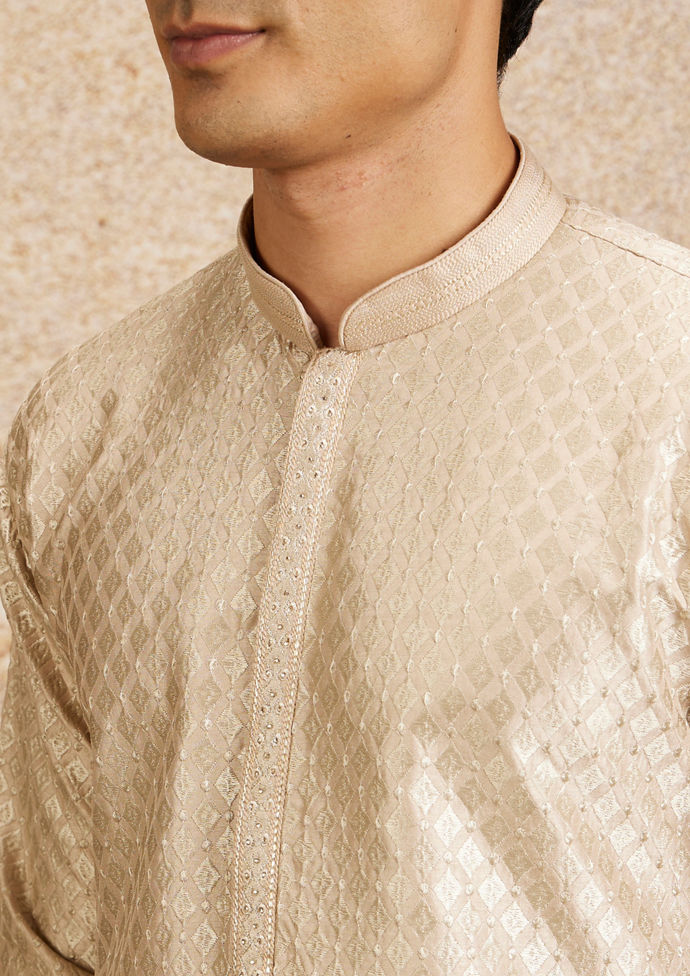
Beige Silk Diamond Jacquard Self-Patterned Kurta Set
770 د.إ
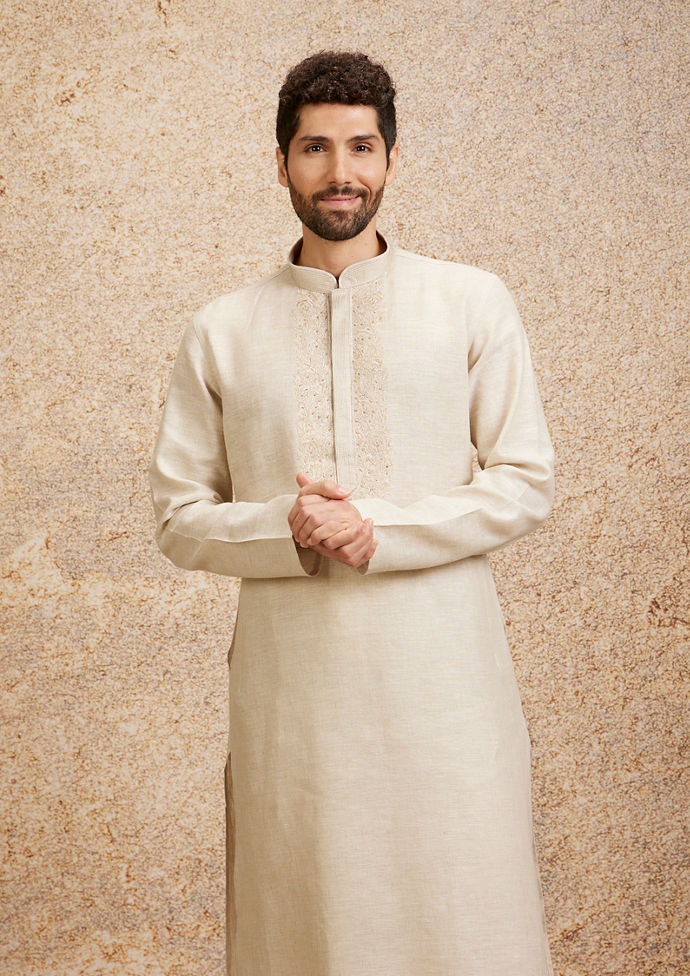
Warm White Linen Embroidered Neckline Kurta Set
945 د.إ
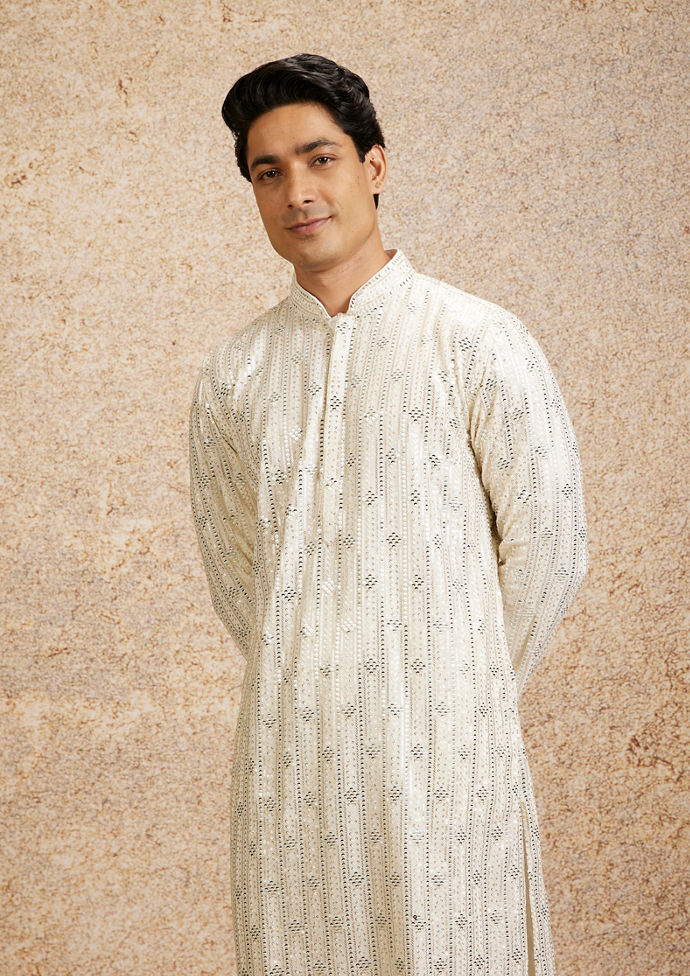
Warm White Georgette Mirror Work Embroidered Kurta Set
855 د.إ





Login to access Twamev Member Exclusive Features like Video Commerce
Enter the email address associated with your Manyavar account
We’ll ask for this password whenever you sign in