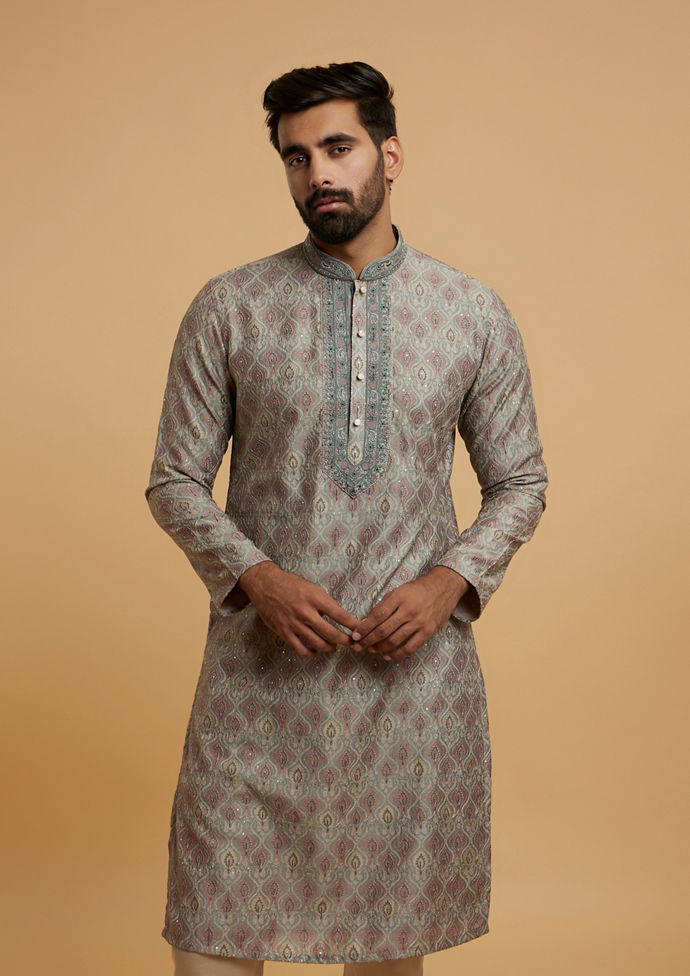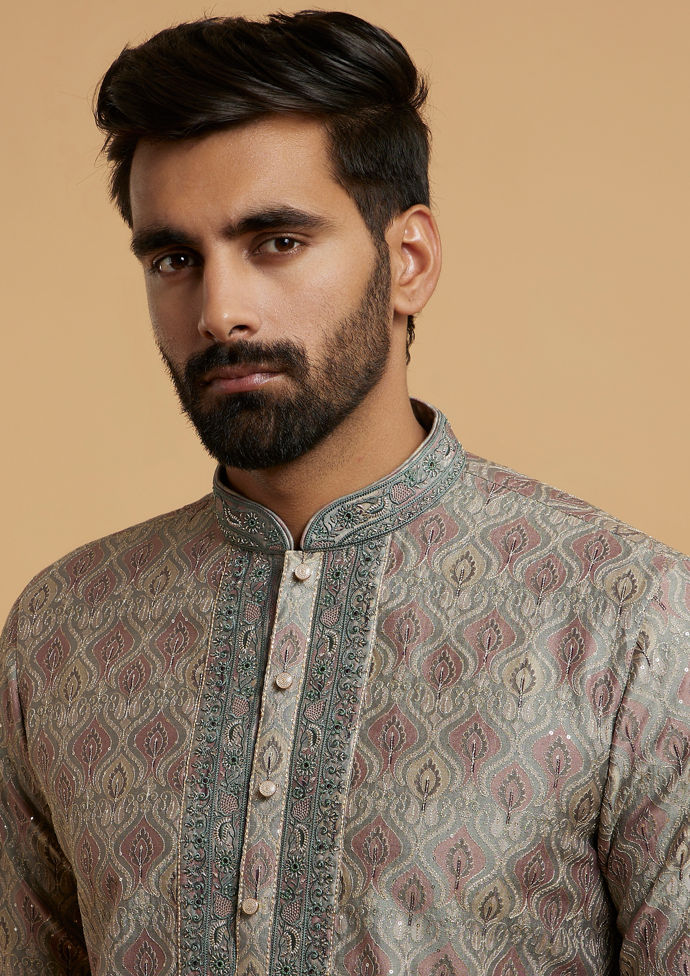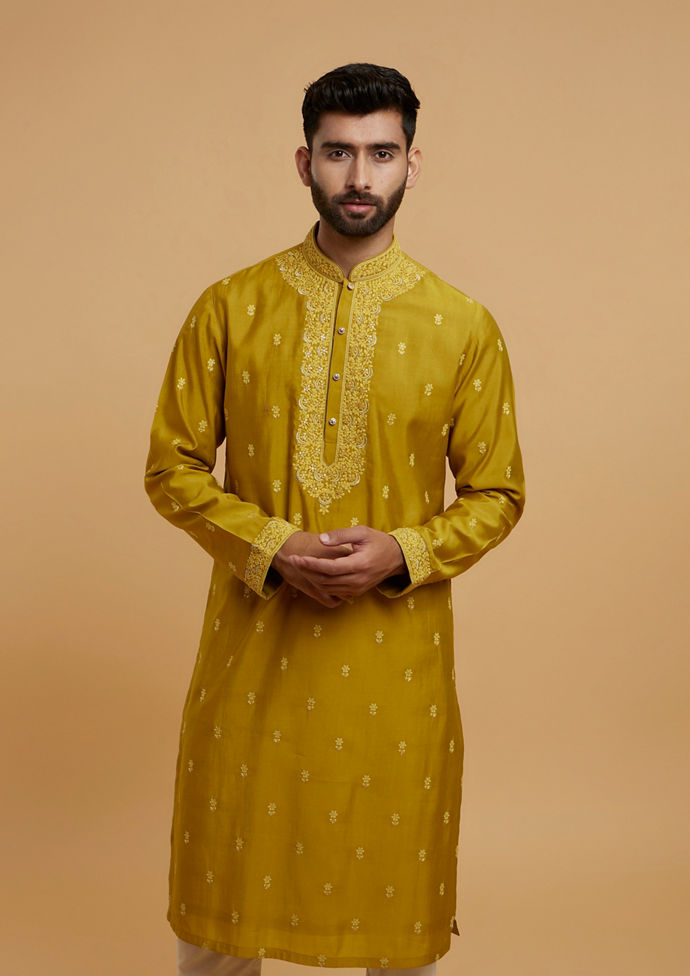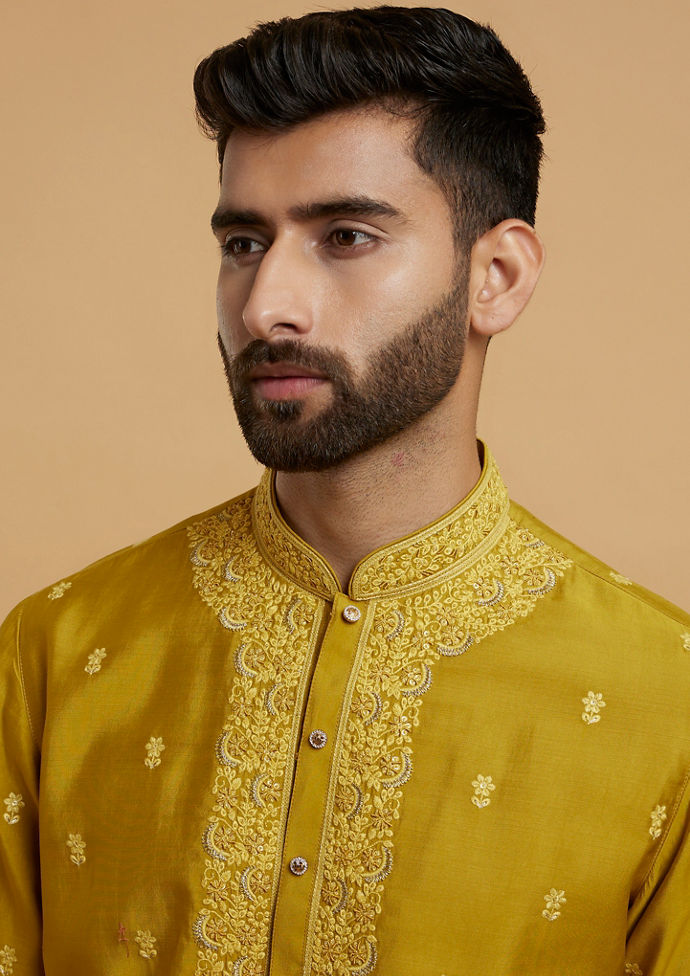
Olive Green Kurta For Men
2 PRODUCTS
Filter

An olive green kurta for men works at weddings, mehendi, and festive evenings because the shade stays quiet beside brighter colors while still reading as a considered choice on its own. This collection carries olive green kurtas and kurtis for men and women, including georgette and silk embroidered sets.
Fabric decides how a kurta wears. Georgette drapes lighter through long ceremonies; silk holds a firmer line in photographs. Each product page lists the fabric, the embroidery, and which pieces come in the set.
Measure your chest and the length you want in inches, compare those numbers with a kurta you already own, and look at the full set before you buy. Here is how the pieces compare.
Two embroidered kurta sets make up the range, one in georgette and one in silk. Georgette drapes lighter and holds pleats and pin tucks; silk keeps a stiffer line through the shoulder and hem, so it holds its shape after long wear. Embroidery sits on the yoke and placket in both, which keeps the front readable without covering the whole body.
Measure chest, shoulder, and sleeve length in inches, then compare the numbers against the size chart rather than your usual ready-made size. Take the chest at the fullest point with the tape level under the arms, the shoulder seam to seam across the back, and the sleeve from the shoulder seam to the cuff. If your chest lands between two sizes, choose the larger one and have the side seams taken in, since letting fabric out is harder than taking it in.
Sangeet, reception, and festive dinners are the main fit. Deep olive reads formal under warm indoor light, and the same set works for a mehndi or haldi function when you want the embroidery to carry the outfit. For a daytime event, a cream or light beige churidar or pyjama balances the darker top; for evening, a darker bottom keeps the look formal.
Men's and women's styles sit in the same range, so a kurta or a kurti is available for whoever is shopping. Buyers who want one outfit that covers a sangeet and a family dinner without a change of clothes get the most use from it.
At Twamev, this collection carries two olive green kurta sets, and both have embroidery worked across the front panel. One is georgette, one is silk. The table below sets out what separates them: fabric, cut, and the occasions each one suits. Read it before opening either product page, because the two sets sit at different points in the range, and the differences matter more than the colour match.
|
|
|
|
|
|
|
|
|
|
|
|
The men's kurtas in this colour are cut straight, with a hem that falls just below the knee and side slits that keep the fit from pulling when you sit. Each product page lists chest and shoulder measurements, so you can compare them against a kurta you already own before ordering. If you plan to wear one over a churidar or straight trousers, check the chest measurement first, then the shoulder. On a straight cut, the shoulder line is what decides whether the drape hangs clean or bunches at the armhole.
The olive green kurti for women in this range runs shorter than the men's kurta, which is what makes it work over palazzos or wide-leg trousers rather than as a full-length piece. The women's styles keep the same embroidery placement across the front panel, so the short and long versions read as one family. If you want an olive green kurta for women that covers both office days and evening functions, the kurti length is the more flexible of the two. Fit notes on each page give the kurta length and sleeve length in inches, so measure a kurti you already wear and match it against those figures before you buy.
Georgette is matte and light, and it holds its shape at the shoulder, so thread embroidery sits flat on the panel instead of dragging the fabric down. That matters on an olive base, where a heavy stitch would pull the colour into shadow and flatten the detail. The fabric also takes dye evenly, which is why olive reads as a single flat tone across the panel rather than a patchy one. Dry cleaning keeps that tone true; heat and direct sun are what fade olive over time.
Georgette is the easier choice for air-conditioned halls and long daytime functions. It drapes without clinging and does not trap heat. For a winter wedding, silk or a silk blend holds its shape through hours of standing, sitting, and greeting guests.
A straight hem falling 1 to 2 inches below the knee is the safest length for photos. It keeps its line when you sit down, and it resists creasing in the car on the way there. A-line and straight cuts read more cleanly on camera than gathered panels, which bunch at the waist.
Keep dense thread work, zardozi, and heavy embroidery for evening receptions, where the lighting carries the detail. A lighter olive green kurti for women suits daytime functions such as haldi, mehendi, or an office celebration. Less weight on the shoulders also means you can move and sit comfortably for longer.
Measure your shoulder width and your chest at the fullest point in inches, then compare both against the size chart rather than guessing from your usual dress size. Keep about 1 inch of spare room at the chest so a tailor can take the kurta in or let it out if the fit is close.
A straight kurti falls from the bust to the hem with no waist seam, which is why the line reads clean and rarely needs a belt. Lengths typically run 40 to 46 inches on straight cuts and 42 to 48 inches on flared ones. On a flared or A-line piece, look at where the flare begins: from the empire line it swings wide below the bust, while from the hip it stays narrow through the waist. Colour does not change any of that, so an olive green kurti in a flared cut measures the same as the identical style in navy. Check the hem measurement against your hip size before you order.
Cotton kurtis sit between 100 and 150 gsm, breathe well, and take repeated washing without losing shape. Chanderi, a silk and cotton weave, is lighter at roughly 60 to 90 gsm and has a slight sheen that photographs well in daylight. Silk is heavier, drapes closer to the body, and creases less, which suits evening functions where you sit for long stretches. For hot afternoons, lighter weaves around 60 to 120 gsm work better; save the 150 gsm and heavier options for winter layering.
Where the work sits matters more than how much of it there is. Placket or collar trim stays visible under a dupatta or jacket, cuff work shows only when you move your arms, and hem embroidery is the first area to pick up dust and fray. Check whether the piece uses hand embroidery, machine stitching, or glued-on stones, since glued beads come off in the wash. Zari and mirror work usually need hand washing in cold water or dry cleaning, and zari threads snag on hook-and-loop tape and rough jewellery clasps.
Read the set inclusions first. Some listings ship the kurti alone, others add palazzo, trousers, or a dupatta, and the bottom piece often follows a separate size chart. Drape weight decides how the fabric falls over the hip, so compare the gsm figure and the fibre name rather than the studio photos. If the bodice is lined, check the lining fibre, because cotton mul lining stays cooler than polyester in humid weather. On the size chart, look for bust, waist, and hip measurements listed in 1 inch increments from XS to 3XL, then buy the size that matches your largest measurement.
Olive sits between yellow and green, so your metal choice decides how warm the outfit reads. Antique gold and brass pull the fabric toward brown and suit daytime functions; silver and gunmetal keep it cool, which works for evening wear. Tan or brown leather footwear fits both, and a belt in the same leather family stops the look from breaking at the waist. For the dupatta, pick a shade one or two steps lighter or darker than the kurta instead of a flat match.
A Nehru jacket in cream, wine, or deep maroon adds warmth without dulling the olive. Silk and brocade jackets hold their shape over a cotton or silk-blend kurta, while wool blends handle outdoor venues where the temperature drops near 10°C. Keep the jacket hem 5 to 8 cm shorter than the kurta so the embroidery still shows, and skip a second patterned layer, since olive already carries the outfit.
A sheet of tissue between layers is what keeps zardozi thread from snagging in transit. Fold the kurta in half lengthwise, lay tissue over the embroidery, then roll from the hem upward so the work faces inward and never rubs against itself. Place the roll in the centre of the suitcase with soft items packed around it. In your room, hang the kurta in a steamy bathroom for 20 to 30 minutes to release creases, hold an iron at least 2 cm from metal thread, or press the reverse side through a cotton cloth.
Shade matters more than the name of the colour. Warm olives with a yellow base flatter cool undertones, while deeper skin tones carry darker, near-forest olives without the green turning grey against the face. If you are unsure, hold the fabric under your jaw in daylight before you buy.
Yes, and it often ends up in heavier rotation than the pieces you bought only for the wedding. Swap the embellished dupatta for a plain cotton one and the same kurta works for Diwali, Eid, and family lunches. An ivory or rust dupatta gives you a second look from the same piece.
Start with the care label, because the answer depends on the fabric. Our georgette and silk styles are dry clean only, since water dulls the sheen and loosens embroidery thread. Cotton and cotton-blend kurtas can be hand washed in cold water with a mild detergent and dried in shade. Keep both out of the washing machine.
Yes, though length matters as much as the size number. A 42 to 48 inch kurta reaches the knee on most heights, and our plus sizes follow the same measurement chart as the straight sizes, so the bust, waist, and hip points stay consistent. If you are taller, check the stated kurta length on the chart rather than trusting the size alone.
Treat both while the stain is still fresh. Blot oil with cornstarch, leave it a few minutes, then brush it off. For turmeric, flush the spot with cold water, work in a drop of dish soap with your fingers, and rinse. Heat sets both stains, so keep the kurta away from hot water and the iron until the mark is gone.
Buy Now: Pink & Cream Chanderi Embroidered Kurta Set , Pink Printed Kurta
Olive Green Kurta Price List
Olive Green Kurta
Price (₹)
Olive Green Georgette Embroidered Kurta Set
A$ 640
Olive Green Silk Embroidered Kurta Set
A$ 320




Login to access Twamev Member Exclusive Features like Video Commerce
Enter the email address associated with your Manyavar account
We’ll ask for this password whenever you sign in